
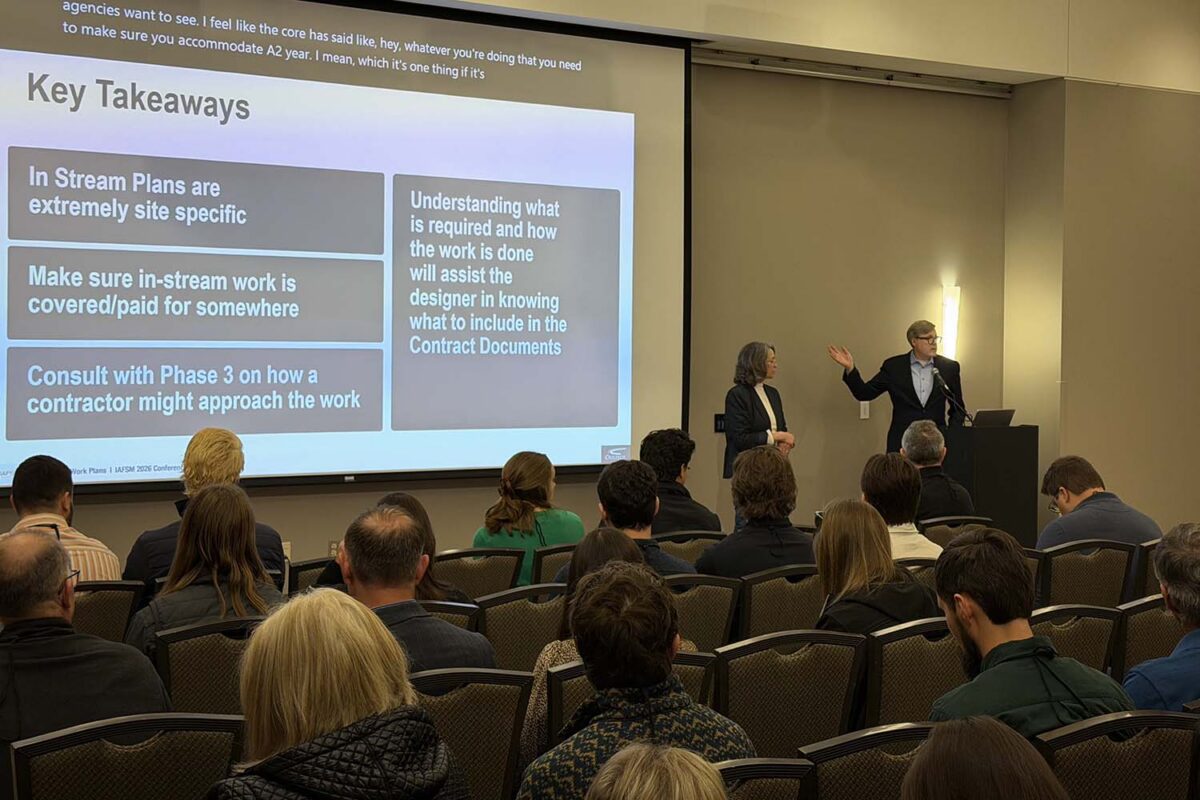
Civiltech’s Tom Liliensiek, P.E., CFM presented “In-Stream Work Plans” at the Illinois Association of Floodplain and Stormwater Management (IAFSM) conference held in March. In responding to the organization’s call for abstracts, Tom chose In-Stream Work Plans as a topic that is often discussed across various engineering disciplines and at many phases of a project from the early stages all the way through construction.
In preparing this presentation, Tom worked with Civiltech’s Jeff Lange, P.E., Director of Construction Engineering. Jeff brings field experience and an understanding of how a contractor would approach implementing the In-Stream Work Plans that are typically included in the project design plans. There can sometimes be a disconnect between the design and permitting versus implementation of the actual plans within the specific waterway. By incorporating the Construction Engineering experience with specific examples of previously implemented in stream work plans, the presentation helped bridge the gap between what is typically included in the design plans versus the reality of In Stream construction work.
An In-Stream Work Plan is generally a plan used when construction is within, crossing, adjacent to, or impacting a flowing body of water. Examples of proposed structures requiring plans can include single culverts, multi-cell culverts, and bridges. The In-stream Work Plan details how the construction work zones will be isolated from the flowing water and how environmental impacts will be minimized. In-Stream Work Plans often include a temporary structure to isolate the work area such as a cofferdam as well as appropriate temporary erosion control and dewatering measures and can include a variety of construction stages and materials setups.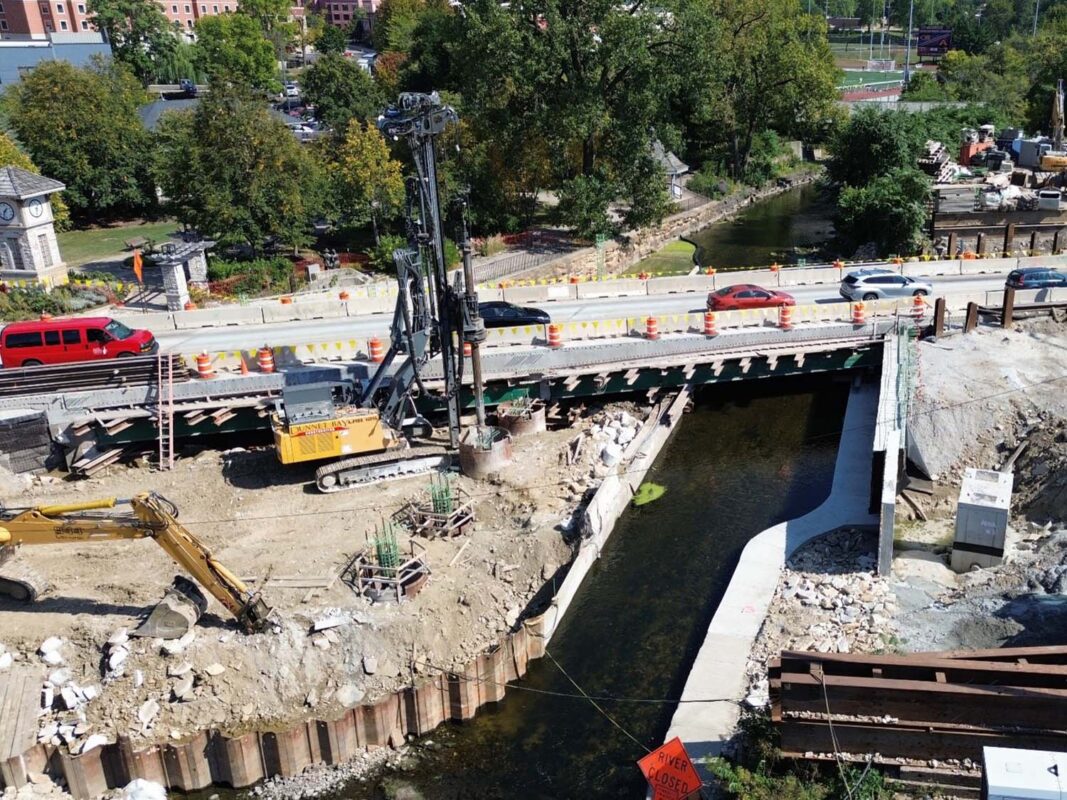
However, plan types and methods will vary based on the specific proposed structure and the project’s overall staging. Also, plans can be subject to environmental regulatory requirements as part of the permitting processes. USACE, Soil and Water Conservation District, and IDNR are examples of regulatory agencies that outline their requirements as part of their agency’s permitting.
The U.S. Army Corps of Engineers (USACE) has a formal definition, “An ‘In-stream work plan’ is a document submitted to the USACE for approval before conducting construction or modification activities within a river, stream, or other body of water. The plan details the methods and materials that will be used to complete the project while adhering to environmental standards.”
A number of complications can affect the development of and adherence to In-Stream Work Plans. Site specific unknowns that will be in place at the time of construction such as waterway levels and weather conditions, are often unknown during the time of design, and can significantly impact the implementation of a work plan. These complications can also sometimes create opportunities for contractors to request change orders.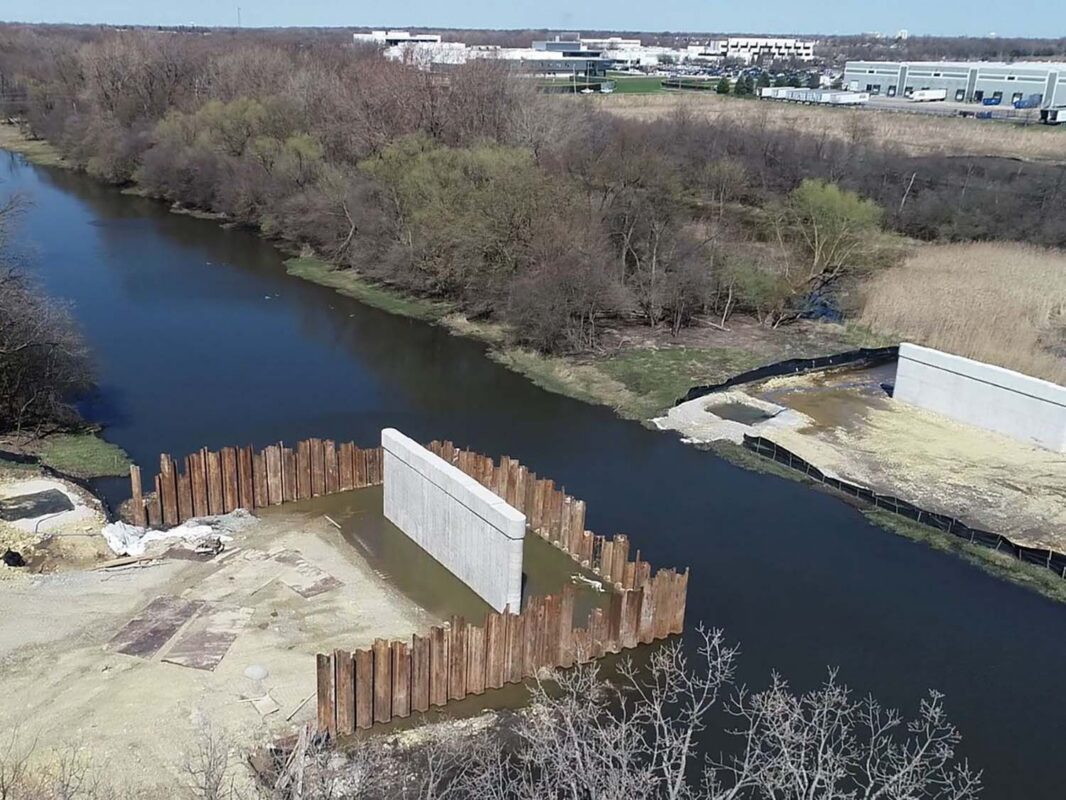
While an In-Stream work plan is intended to provide guidance for the contractor to execute the construction, the plan should not dictate the contractor’s means and methods. This is the contractor’s responsibility and will be identified in the contractor’s required submittal and shop drawing process. The Contractor must provide not only a graphic in their submittal but also a narrative describing the work.
As noted previously, In-Stream Work Plans often include a cofferdam. The USACE defines a cofferdam as a general term for a temporary structure intended to provide a dry work area. The Illinois Department of Transportation (IDOT), however, has a specific pay item for identifying a cofferdam which is required to be covered in the Engineer’s Standard Specifications. The definition of the structure for the IDOT pay item would vary depending on height and have to be stamped by a Structural Engineer.
There are a number of ways to include an In-Stream Work Plan the project budget. As noted above, it can be treated as the “cofferdam” individual pay item on IDOT projects. The Plan can be included as an erosion control item or as an incidental cost as part of a culvert installation. Regardless of where it is included in pay items, it can be a major expense component of the budget, thus a well-detailed In-Stream Work Plan is beneficial. 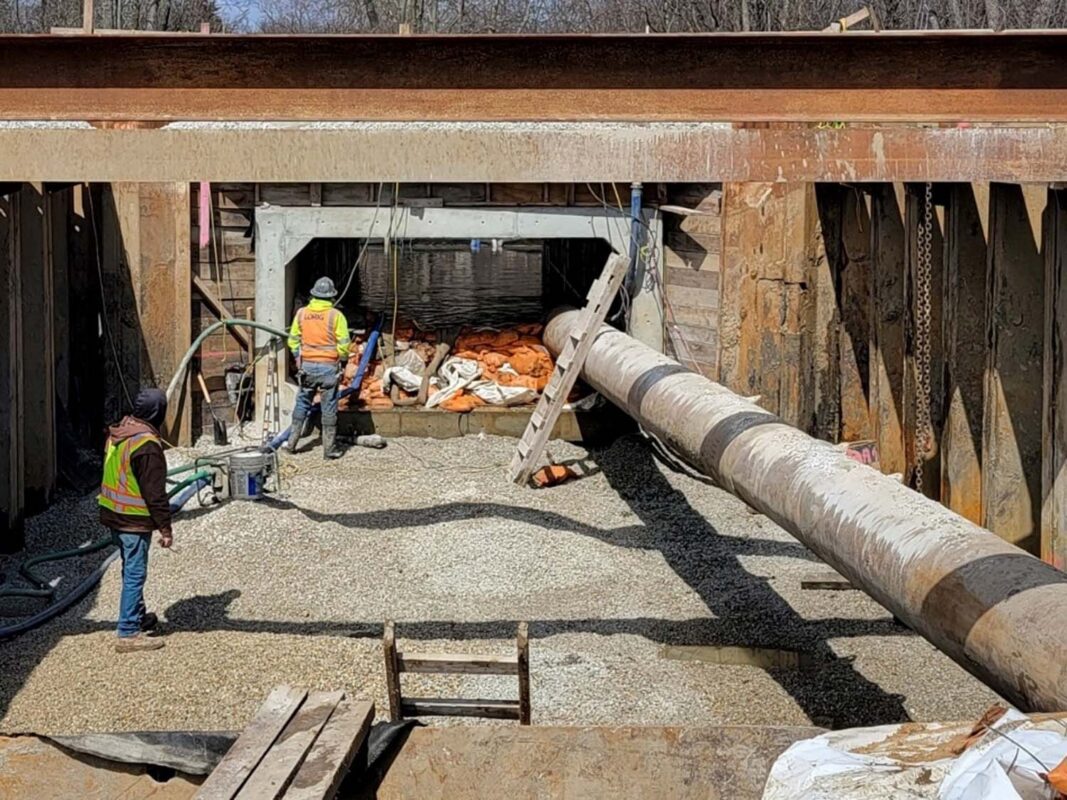
The purpose of the presentation was to try to provide an understanding of what is required and give examples of how an in-stream work plan was actually implemented, with the goal being to assist the designer to know what to include in project design contract documents. The key takeaways of the presentation are that in-stream work plans are extremely site and project specific, ensure that the contract payment and expectations for the in-stream work is clearly defined in the contract documents, and encouraging designers to get input from Construction Engineers or contractors to ensure their In-Stream Work Plans are implementable. Plans that can be adhered to by contactors and the realities of the project site can mitigate change orders and disputes and make it easier to uphold environmental standards.
The In-Stream Work Plan presentation included a number of Civiltech project examples and discussed the Plan design and how it was actually executed in the field. One project example that illustrates the benefit of designers understanding the construction implications is US Route 14 underpass project in Barrington that is currently under construction. Due to the proposed improvement existing Flint Creek Tributary waterway required a complete relocation on a different alignment. In order to facilitate the project staging as well as the ultimate waterway alignment, multiple creek stages were required with a detailed in stream work plan. The plan required review and approval from multiple agencies including the USACE and Lake County Stormwater Management Commission.