
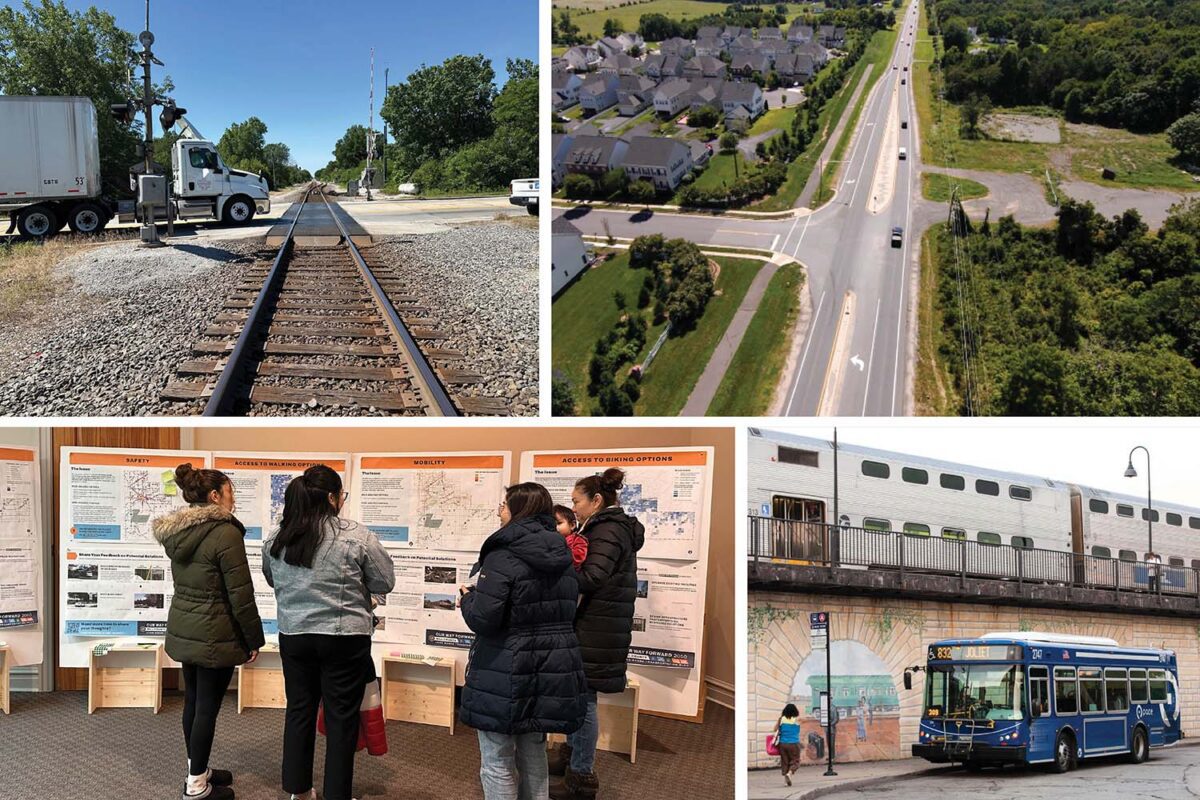
A Unique Collaboration. The Will County 2050 Long Range Transportation Plan (LRTP), “Our Way Forward 2050,” is complete and providing a playbook for Countywide transportation needs for the next 25 years. Civiltech’s Transportation Planning and Traffic Engineering teams worked together to lead this comprehensive study. Partnering firms included All Together, Cempel International Transportation Consulting, and Resource Services Group, Inc.
What makes this LRTP exceptional is its robust public outreach, countywide Travel Demand Model, and multimodal project evaluation process. And for Civiltech, the development of this Plan involved a uniquely collaborative effort between our Transportation Planning and Traffic Engineering teams.
The County’s Changing Transportation Landscape
Will County’s transportation landscape includes an urban center in the City of Joliet, growing suburban areas, and pastoral farmlands that are interspersed with large and busy intermodal and freight-focused facilities, all woven together by a transportation network of roads, trails, trains, and transit lines. Also, unforeseen transportation challenges, such as the COVID-19 pandemic, the proposed South Suburban Cargo Airport, or global economic shifts, highlight how unexpected transportation demand changes result in the need for flexible responses to the changing needs of all transportation modes. 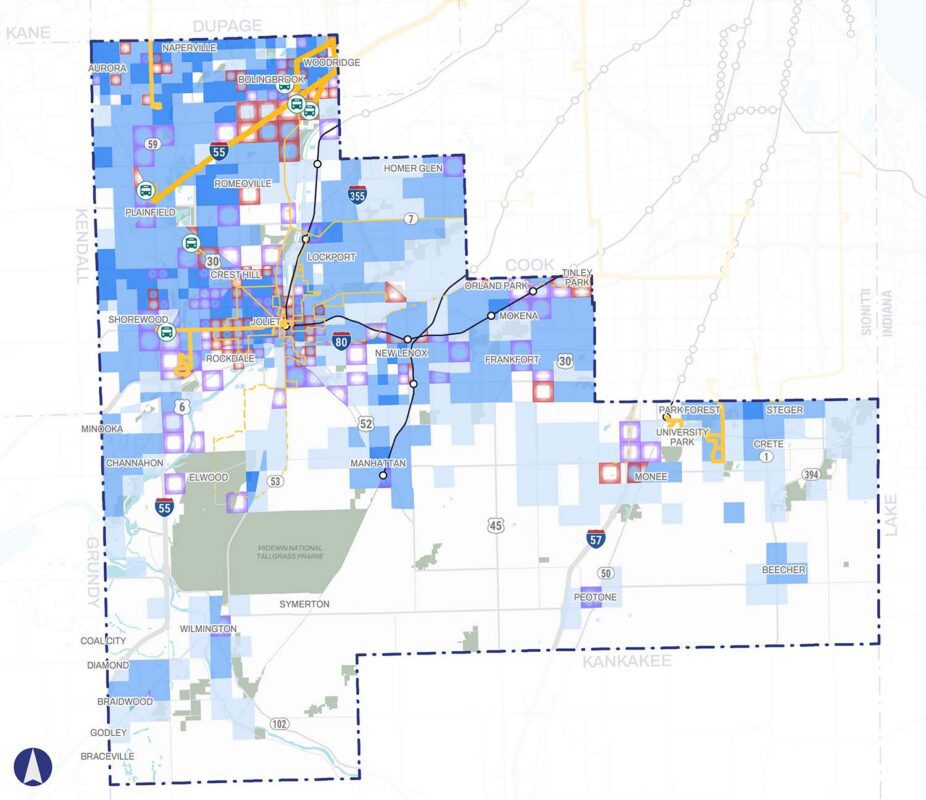
Robust Public Outreach: Meeting People Where They Are
One of the unique features of this plan was utilizing a broad range of community input. Our team developed a comprehensive three-pronged engagement strategy designed to engage all communities. The strategy included creative in-person events designed to meet people where they are, ensuring geographic diversity, and reaching residents who might not otherwise participate in traditional planning meetings.
The team also engaged with residents through online surveys, virtual meetings, stakeholder discussions, and interactive in-person and online mapping activities. Customized communication materials promoted engagement opportunities through the project website, social media, email distribution lists and signage. Communication packets were shared with stakeholders across the county, and the project team provided frequent touch points with the Advisory Committee and County Board.
The overall Public Outreach approach brought a number of benefits. It ensured that all voices, urban and rural, and all levels of concern were heard. Also, this high level of engagement informs community members about potential solutions and projects early in the process and encourages collaborative problem solving.
Countywide Travel Demand Model: Flexible Solutions
The study team developed a County specific Travel Demand Model to identify future transportation needs and evaluate the effectiveness of proposed improvements in the transportation network. The model used foundational data of the Chicago Metropolitan Agency for Planning (CMAP) regional travel demand model and augmented it with tailored demographic information, land uses and development, traffic volumes, and transportation network information to more closely reflect actual conditions across the county. The model is readily adaptable and can be used moving forward to forecast the effects of major transportation network changes.
Tailored Data in the Travel Demand Model 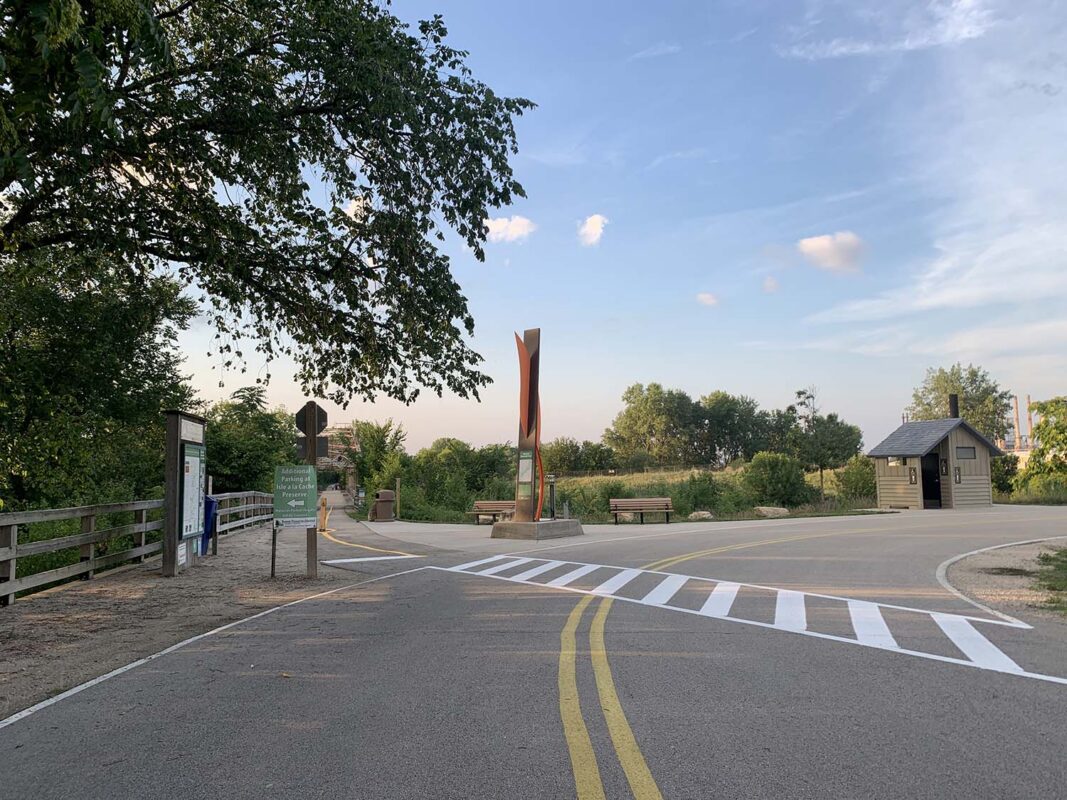
The robust public involvement efforts combined with extra in-depth research helped the team put together a more detailed and holistic view of the County’s transportation network. The CMAP Travel Demand Model and foundational data include major known developments. The data acquired through the Planning team’s public outreach campaign provided information that would have not have otherwise been captured and included in the regional model. Through public input, the team learned about anticipated smaller-scale local and privately funded developments, both commercial, industrial, and residential, that would impact future traffic volumes. Municipalities within the County were also able to share active and future transportation improvement plans that were anticipated for their communities.
Public outreach also helped the team obtain data from the community that was otherwise not recorded. Community members and stakeholders were able to fill in this type of personalized data though outreach events as well as through online interactive maps and surveys provided by partner firm All Together.
A Unique and Collaborative Working Relationship
Civiltech Environmental Planner, Samantha Primer, CWS, and Senior Traffic Engineer, Brian DeSalle, P.E., PTOE, worked closely together on the Will County LRTP. They shared that there is a perception that planners and engineers do not always share the same project vision with planners focusing on the big picture and engineers concerned with project-specific design requirements and detail. Sam and Brian’s work on the LRTP underscores that planning and engineering can work hand in hand, bringing beneficial outcomes through collaboration. 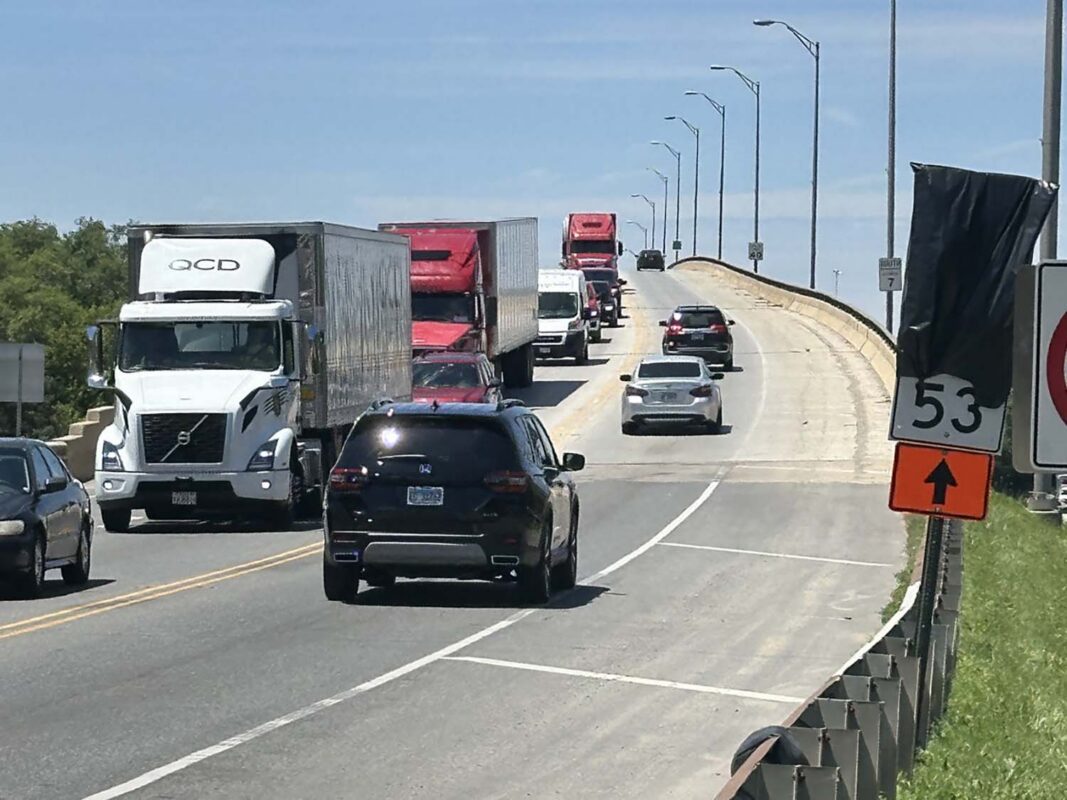
Sam and Brian explained that working together on the LRTP offered both of them the opportunity to see the needs of the study through the lens of the other discipline. They recognized the overlap in their roles and worked together to ensure the unique data sets gathered through the planning public engagement process were then captured in the Traffic Demand Model. Brian stated that looking at the study parameters outside of an engineering lens enhances his engineering skills, and Sam shared that understanding the engineering side of the study helped her see different possibilities and outcomes. Also, Sam and Brian stated that they came away from the experience with good lessons learned that can be applied to other projects.
The cross-department collaborative effort of the Will County LRTP provides an example of one of Civiltech’s strongest differentiators. Our teams routinely work across departments for an integrated and cohesive project delivery approach. We are uniquely skilled at guiding our client’s projects through all phases-from planning and studies through design engineering to a successful project outcome.