
The Will County 2050 Long Range Transportation Plan (LRTP), “Our Way Forward 2050,” is complete and providing a playbook for transportation needs across the county for the next 25 years. Civiltech’s Transportation Planning team together with our Traffic Engineers and partnering firms All Together, Cempel International Transportation Consulting, and RSG led this unique and expansive study.
While it is not uncommon for counties in northeast Illinois to create a Long-Range Transportation Plan (LRTP), what sets this one apart is its robust public outreach, countywide Travel Demand Model, and multimodal project evaluation process. In taking this approach, Our Way Forward 2050 sets the standard for best practices by providing a strong base of transportation improvement projects and policy recommendations while allowing flexibility to adapt to unknown future conditions.
The Challenge 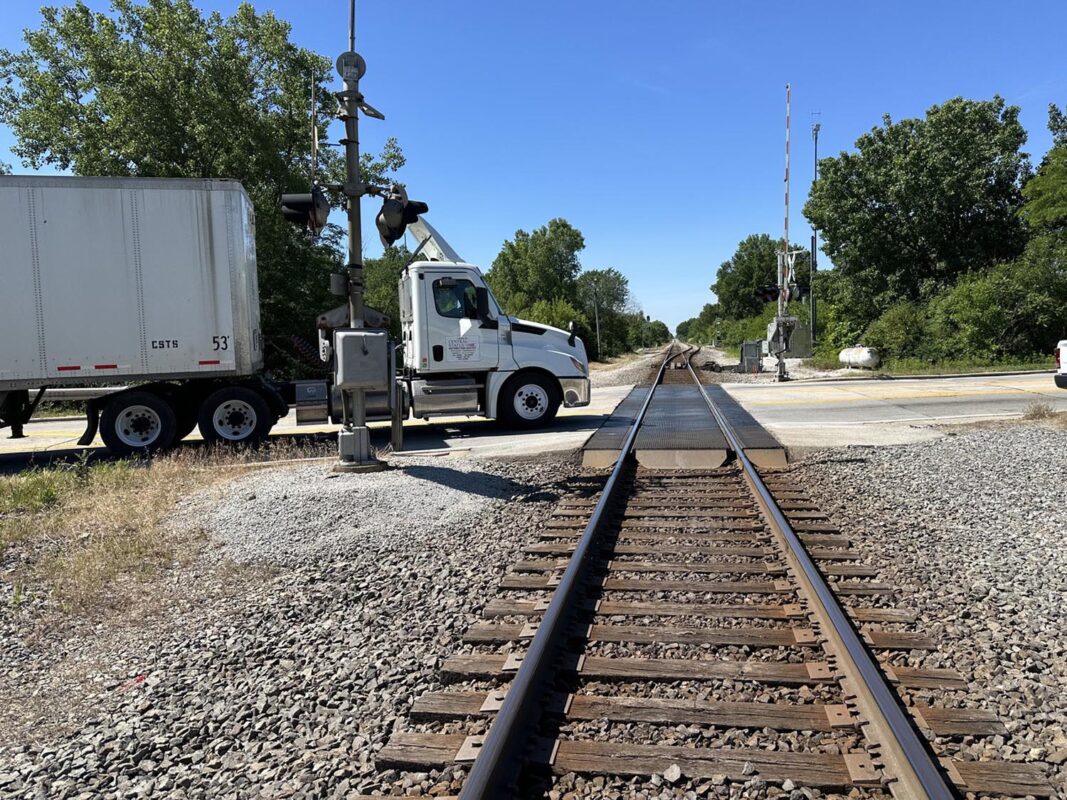
Will County’s landscape and land use are highly varied: busy suburbs in the north and peaceful southern farmlands are interspersed with the nation’s biggest and busiest intermodal and freight-focused facilities, all woven together by a transportation network of roads, trails, trains, and transit lines. In addition to the known transportation planning challenges, unforeseen transportation challenges, such as the COVID-19 pandemic, the status of the proposed South Suburban Cargo Airport, or global economic shifts, highlight how quickly and unexpectedly transportation demand can change, resulting in the need for flexibility in responding to the changing needs of motorists, freight movement, transit, bicyclists, and pedestrians.
The Approach: Meeting People Where They Are
Throughout the planning process, community input was essential. Our team developed a comprehensive three-wave engagement strategy centered around hearing from urban and rural communities. We heard from residents at in-person events, online surveys, virtual meetings, stakeholder discussions, and interactive in-person and online mapping activities. We gathered feedback from nearly 1,700 survey respondents and over 1,000 in-person participants across Will County. The diverse representation led to an LRTP that caters to the needs of Illinois’ fourth largest city, Joliet, and rural communities alike.
Some in-person events were stand-alone while others were part of existing county-wide events, such as holiday and children’s events, meeting people where they are, ensuring geographic diversity, and reaching residents who might not otherwise participate in traditional planning meetings. To make engagement fun and accessible, the study team incorporated interactive exercises such as priority voting, sticker-based preference polling, and discussions. Games, prizes, and candy encouraged participation across all age groups. 
Customized, colorful communication materials promoted engagement opportunities through the project website, social media, and email distribution lists. Banners were also placed on Pace Bus routes. Communication packets were shared with stakeholders across the county to include in their digital and print communications. The project team also provided frequent touch points with the Advisory Committee and County Board.
The Approach: Moving Forward with Flexible Solutions
The study team developed a Will County specific Travel Demand Model to identify future transportation needs and evaluate the effectiveness of proposed improvements in the transportation network. The model used the foundational data of the Chicago Metropolitan Agency for Planning (CMAP)regional travel demand model and augmented it with tailored demographic information, land uses and development, traffic volumes, and transportation network information to more closely reflect current conditions across the county. This model is readily adaptable and can be used moving forward to forecast the effects of major transportation network changes, shifts in travel demand patterns, addition of the proposed airport, or wide-scale adoption of technologies that change travel behavior.
Furthermore, the study team looked beyond the county roadway network, incorporating a multimodal evaluation that included local and state roadways, transit, and trail recommendations at a project and policy level. This holistic view acknowledges the diversity of how people travel as well as the need for interagency coordination to maintain a resilient transportation network.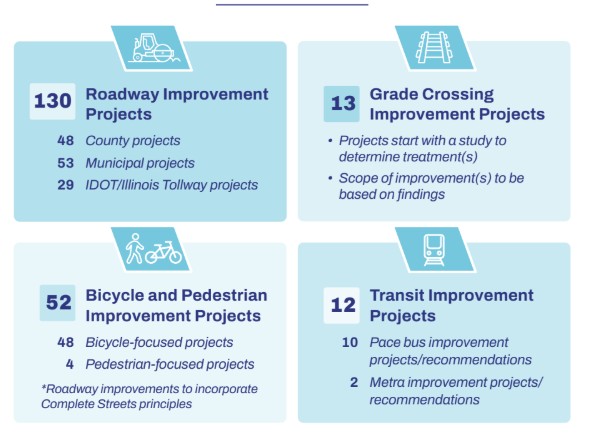
The Outcome: Our Way Forward 2050
Robust public outreach directly informed the county’s vision, inputs for the Travel Demand Model, project evaluation process, and the projects and policies themselves, creating a roadmap that is both data-driven and responsive to resident needs. The diagram included here illustrates how public feedback and the Travel Demand Model fit into the study team’s planning process.