
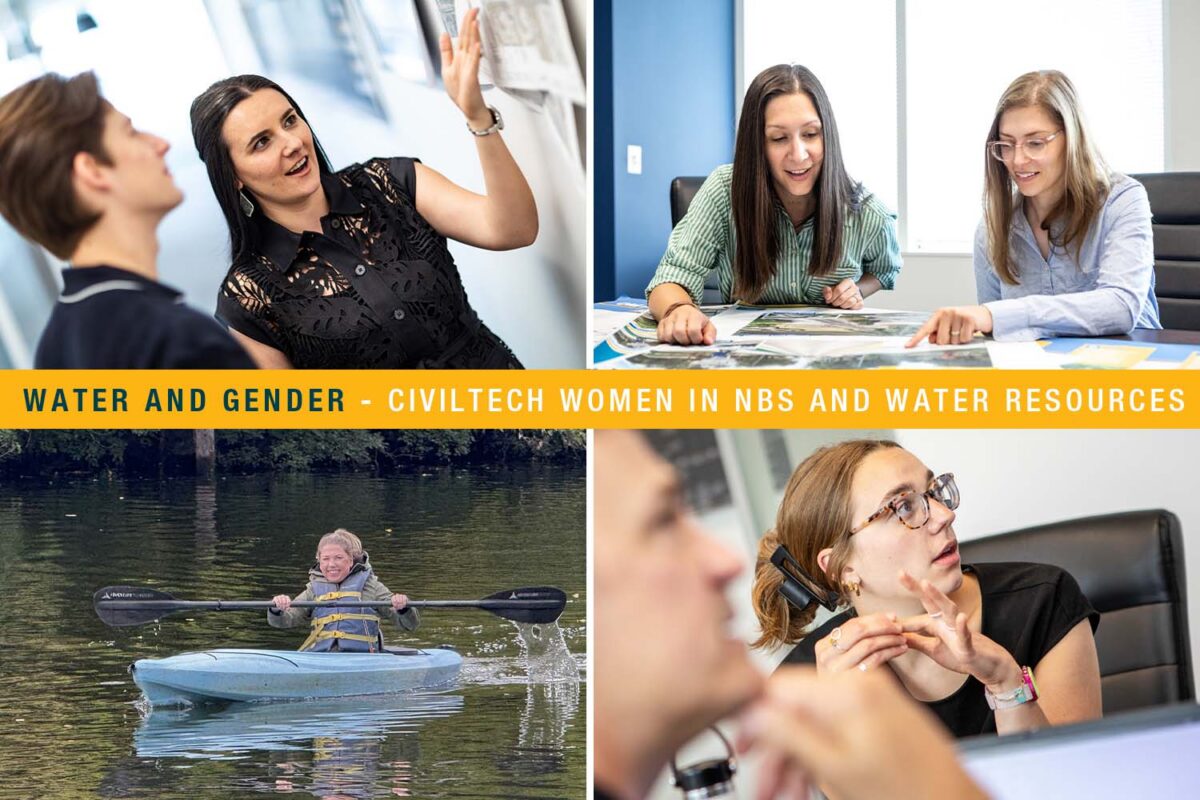
Sunday, March 22, is World Water Day, and this year’s theme is “Water and Gender.” The theme highlights that global water crises affect everyone, but not equally. When people lack safe drinking water and sanitation, there are often inequalities; women and girls face the greatest challenges.
This year’s theme reminds us that women must be equitably represented at all levels of water leadership and must be involved in water related engineering, science, and policy. We caught up with Weronika and Erin, Engineers in our Water Resources department; Sophia, an Ecological Engineer in our Nature-based Solutions (NbS) department; and Sam, an Ecologist in NBS to discuss their choice of Engineering and Environmental disciplines and the role water management plays in their careers.
How/why did you choose to go into your engineering discipline?
Weronika: From a young age, I was captivated by water and always wondered where it comes from and where it goes. Growing up near a river, I constantly found myself asking questions like why the water was higher some days or why the current seemed stronger. Witnessing the river flood several times only deepened my fascination. In high school, I discovered a love for math, science, and creative problem-solving, which naturally drew me toward engineering. I applied to the Civil & Environmental Engineering program at UIUC, and after my first year of being exposed to the various disciplines, I found that Hydraulics and Hydrology was the perfect fit. It brought together my childhood/adolescent curiosity and my academic interests. 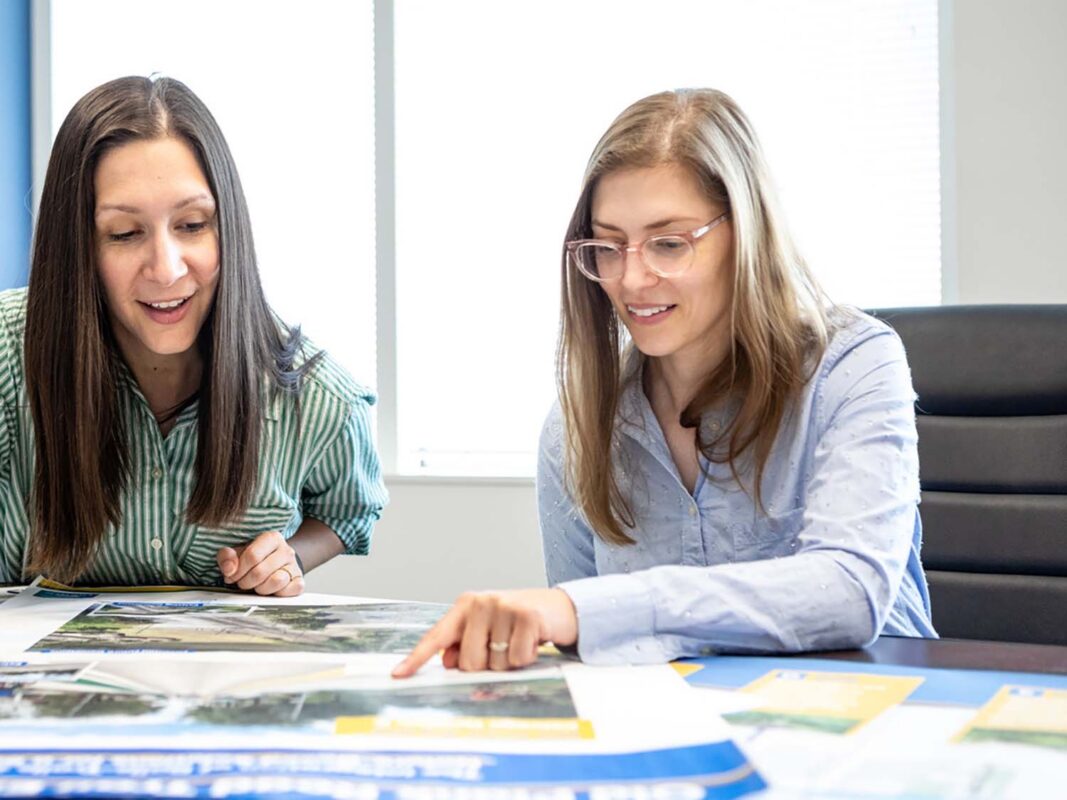
Sophia: I’ve always wanted a career in environmental work, but I was never actively seeking a Nature-based Solutions job – I didn’t really know a position like this existed! When I got connected to Civiltech during my senior year of college, I learned about the NbS department, and it just seemed like the perfect fit.
Sam: When I was in undergrad at Ohio State, I saw a professor give a presentation on her research in plant evolutionary ecology. I was so interested in it that I sent a follow up email asking if she had any positions available for undergraduates. Soon after, I was working in her lab and fell in love with research, ecology, and plants in general. In my early career, I worked as a plant ecologist in various roles before deciding to explore how my background could fit within Civil Engineering.
What do you enjoy most about your chosen engineering discipline?
Weronika: Water is an unpredictable, powerful, and ever-changing force, and that’s what makes this discipline so fascinating to me. In my day-to-day work, I’m exposed to new situations where water behaves in unexpected ways, and I enjoy the fluid mechanics side of things that helps explain and predict that movement. Beyond the technical work, there is nothing quite like seeing a project you designed come to life during construction and witnessing the real-world impact it has on people’s lives. The excitement of homeowners along a street that no longer floods after every rainstorm is very rewarding. I also enjoy projects that require more creative, out-of-the-box thinking to find a solution. Those challenges push me to grow and remind me why I chose this field.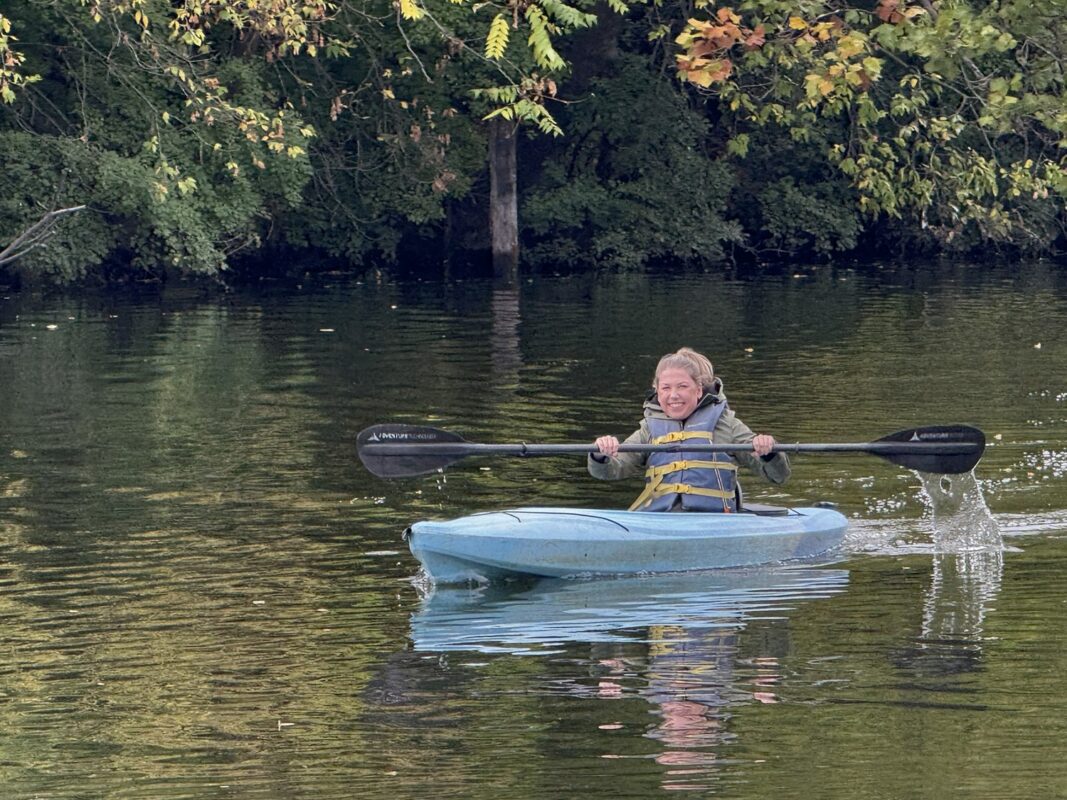
Erin: I enjoy solving a problem! Sometimes you have to get creative with your solutions to flooding and stormwater management. You may not have unlimited room on the property for a detention basin or room in the ROW for the required size pipe for underground detention. Now working with the NbS department, I hope to implement some creative solutions that will offer water quality benefits in addition to managing the stormwater. More bang for your buck!
Sophia: My favorite thing about this discipline is that it combines my desire to work as an engineer with my passion for sustainability. Even though I just started, it’s been really cool to learn about all of the opportunities to integrate nature into traditional engineering design.
Sam: One of the things I enjoy most is the variety of projects I work on. Prior to joining our NbS department, I worked in Phase I and then in Planning. There has been a home for my background and skill set within each department, and along the way, I’ve gotten to learn more about Planning as well as Phase I Engineering. The work I get to do is very collaborative and dynamic which is fun for me. The mix of office and field work is also a plus!
What impact do you hope to make through your career?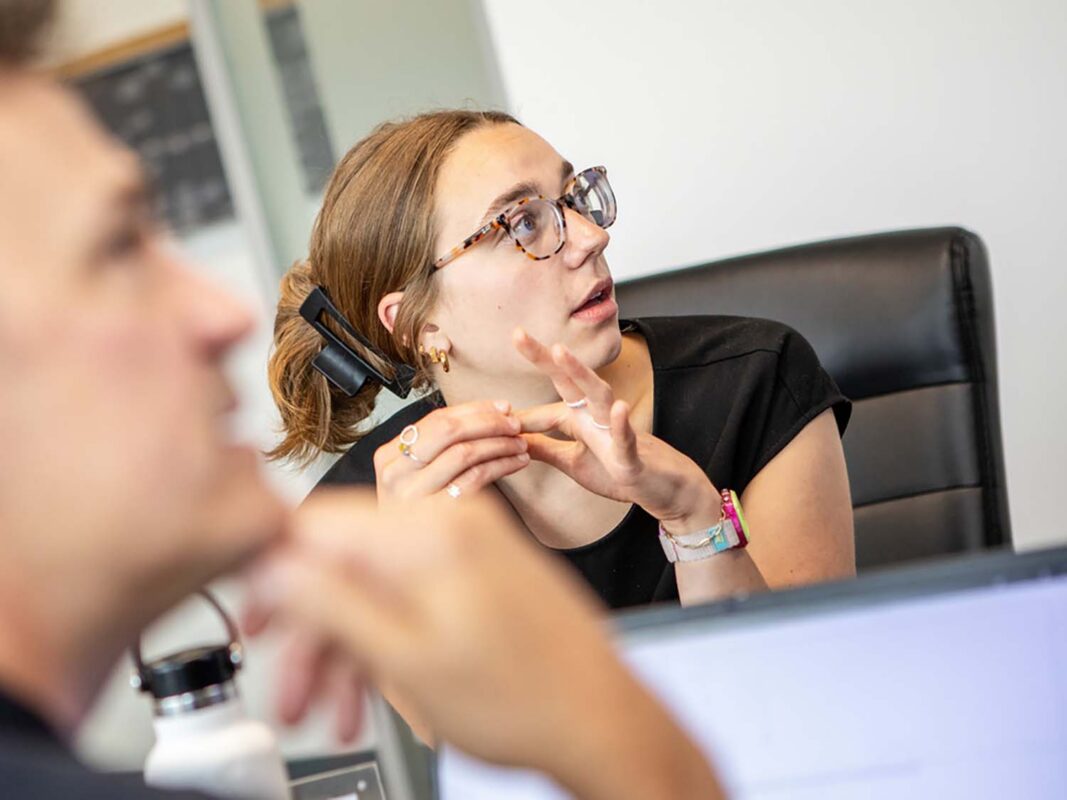
Weronika: My goal is to help local communities prioritize and invest in stormwater infrastructure. As climate change drives increasing rainfall trends, maintaining and improving flood protection is more critical than ever. What were once considered rare, once-in-a-lifetime flood events are unfortunately becoming more common, and communities need to be prepared. This can look like something as straightforward as upsizing a pipe along a residential road that floods with every rainstorm, or as comprehensive as introducing sustainable solutions like green spaces, permeable pavement, and detention ponds that double as recreational areas. Throughout my career, I hope to stay ahead of industry trends and be a resource for communities looking to adapt and protect themselves as rainfall patterns continue to evolve.
Sam: The Nature-based Solutions department is just about two years old. I’m really excited to see how the department grows and to get to be a part of that growth. At the end of my career, I’d like to be able to look back on or visit projects I’ve contributed to and know that they’ve had a meaningful impact on the environment.
How do you think your role here at Civiltech benefits responsible water management?
Weronika: As a Water Resources Engineer, my day-to-day work centers on developing drainage plans that support responsible stormwater management. Our team stays current on evolving rainfall trends and actively encourages communities to implement stormwater solutions that protect them during heavy rain events. We attend conferences to stay informed on the latest developments in floodplain management and stormwater engineering across Illinois, ensuring our designs reflect the most up-to-date standards and best practices. Through the drainage plans I work on, I feel I am contributing to a larger effort to build more resilient communities that are better equipped to handle the increasing demands that a changing climate places on our water infrastructure.
Erin: Every project I deal with benefits responsible water management! I, along with the water resources team, ensure transportation and structural improvements result in true improvements overall and not in the unintended consequences of flooding the neighborhood downstream or the property next door.
Sophia: All of the work the NbS department does relates to responsible water management, rather it’s by protecting wetlands, monitoring and/or selecting native plants that help to filter out toxins or designing more natural ways to manage stormwater. 
Sam: In my role at Civiltech, I strive to bring an ecological perspective into our planning and design processes. This benefits water management by helping us understand how the natural world interacts and relates to the built environment.
In some final thoughts, Weronika summed up the “Water and Gender” theme in relation to her career with Civiltech:
Water insecurity does not affect everyone equally. Globally, women and girls carry a disproportionate burden of the water crisis, spending time managing daily water needs in ways that limit access to education, economic opportunity, and civic life. Even in communities like the ones I serve, the effects of poor water infrastructure often fall hardest on those with the least resources to adapt. The people responsible for making decisions about water need to reflect the full diversity of the communities they serve. Women have historically been underrepresented in water leadership and engineering, yet we are often the most directly affected by water challenges at the household and community level. Diverse perspectives lead to more creative, inclusive, and effective infrastructure. My hope is that by showing up in this field, I can make room for the next generation of women who are just as curious about water as I was standing by that river as a child.