
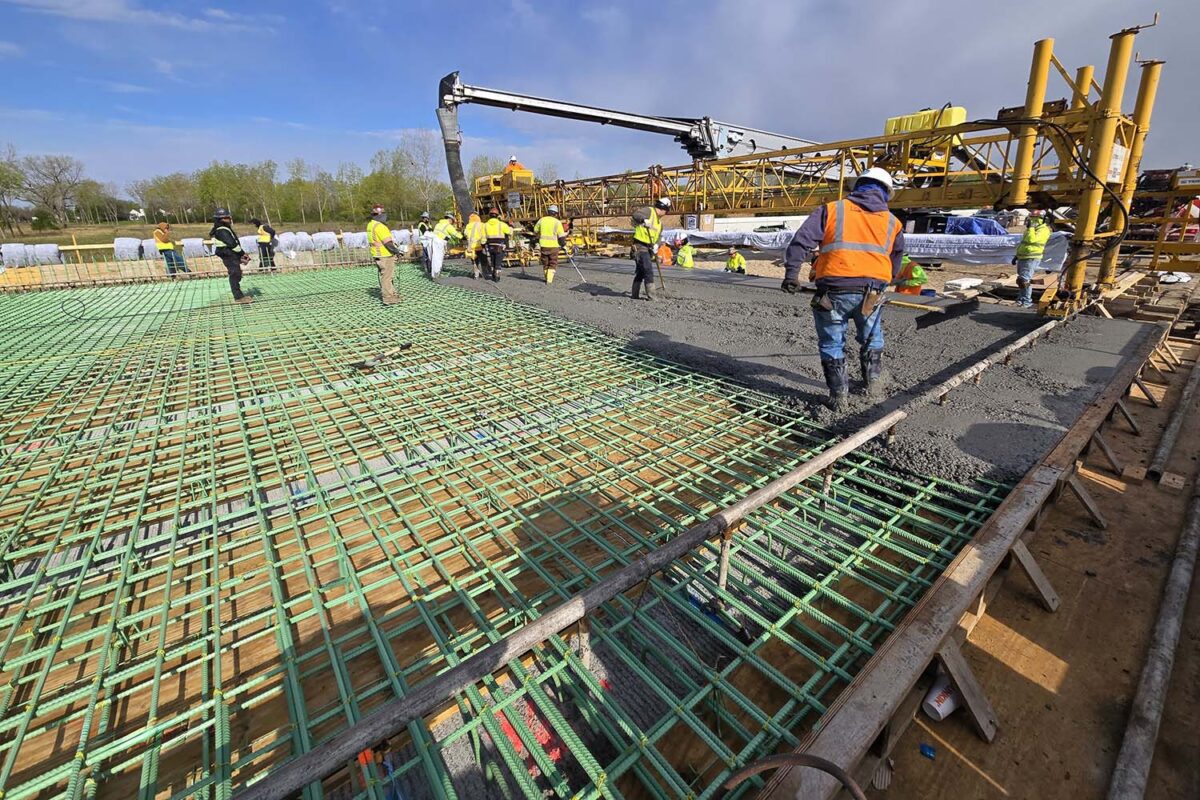
Civiltech is continuing our work with the McHenry County Division of Transportation to deliver on their commitment to improve the Randall Road corridor ─ relieving congestion, accommodating current and future traffic volumes, and supporting continued economic growth and regional mobility in the Algonquin/Crystal Lake/Lake in the Hills area. The project has now entered the second and final phase with construction of the Randall Road North Segment, from Ackman Road to Acorn Lane/Polaris Drive. Civiltech’s Brent Giesen, P.E., together with Baxter & Woodman, is providing Resident Engineering services.
Recently, the project reached a major milestone as mainline concrete paving began, the culmination of extensive foundation work, utility relocation, and ground improvement needed to build on the corridor’s challenging soil conditions. The mainline concrete paving started in the middle of June and is being installed in four sections. The southbound lanes will be completed as Stage 1. Stage 2, which will begin in October, is a temporary section of pavement to accommodate the construction of the forthcoming Stage 3 northbound lanes.
Installing the mainline concrete is a milestone due to the extensive infrastructure and preparation work that had to be completed first. Upon completion of pre-stage and preliminary site work, utility coordination occurred. Once utility work was complete, the project’s extensive excavation and ground improvements could begin.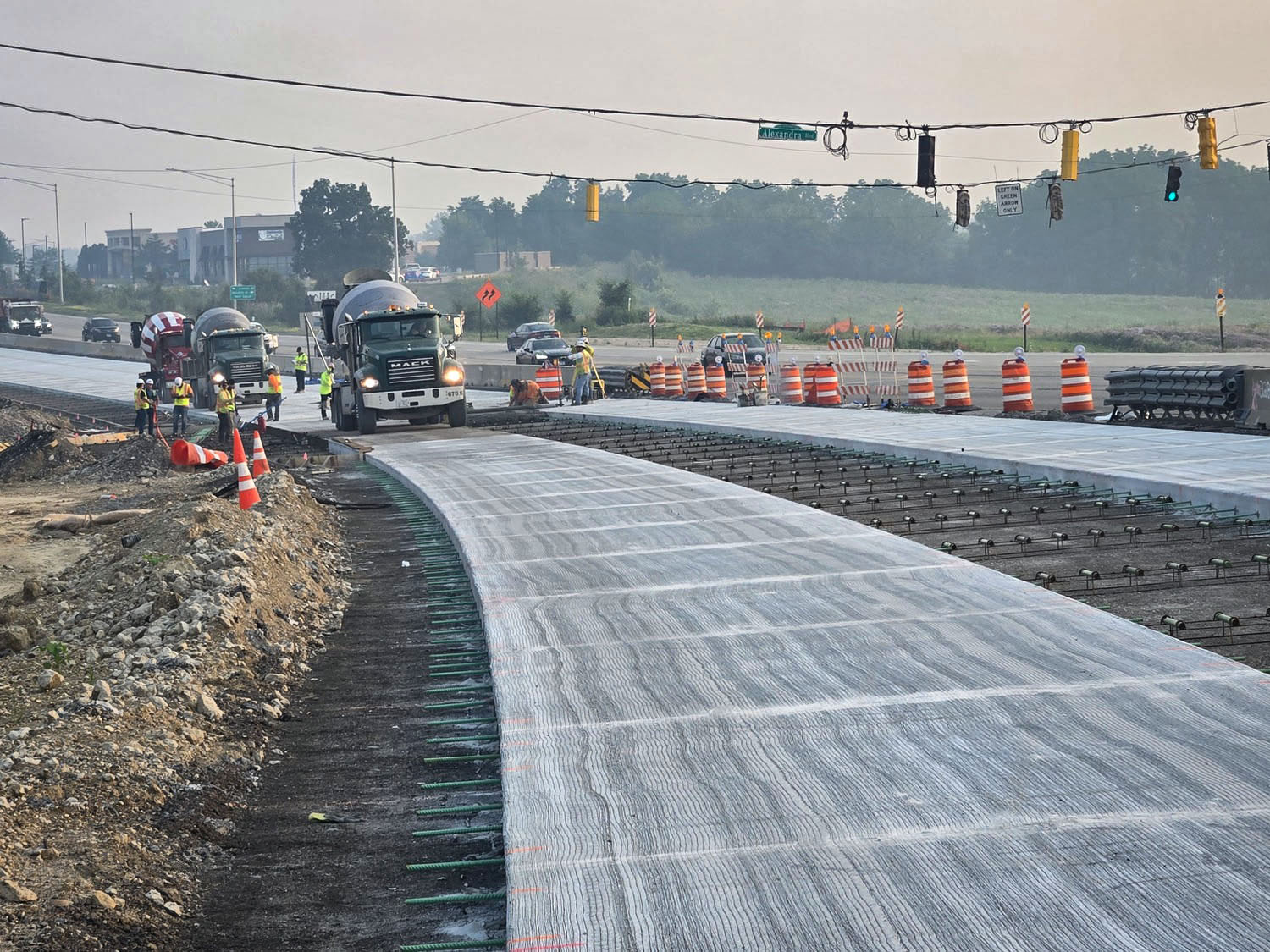
The roadway is located on poor soil conditions, and the reconstruction involves removing and replacing the existing roadway underlayment system. The road was previously built on a Geofoam system, also known as Expanded Polystyrene blocks or EPS. Geofoam is often used as a fill material beneath roadways instead of traditional fill, as a rigid but lightweight material to carry the pavement over unstable soil. A disadvantage of the Geofoam system is that it increases the freeze-thaw action under the roadway resulting in the need for extensive deicing and roadway maintenance.
The new system being installed includes timber piles as the foundation. Each pile has a 4’x4’ concrete cap. An aggregate load transfer platform consisting of layers of aggregate and a biaxial geo grid ─ a type of plastic mesh, is placed on top of the concrete caps. The geo grid spans the gap between the piles and adds stability to the aggregate base. Impacting the project coordination and schedule is the massive number of timber piles required. The entire project includes driving 2,000 piles, nine hundred of which were completed as part of Stage 1.
In addition to the foundation and base, MSE walls and embankments were installed prior to beginning the mainline concrete. The MSE walls were poured with a form liner and painted for a natural stone aesthetic. Work on the walls proceeded through the winter months to prepare for the pavement installation scheduled for summer.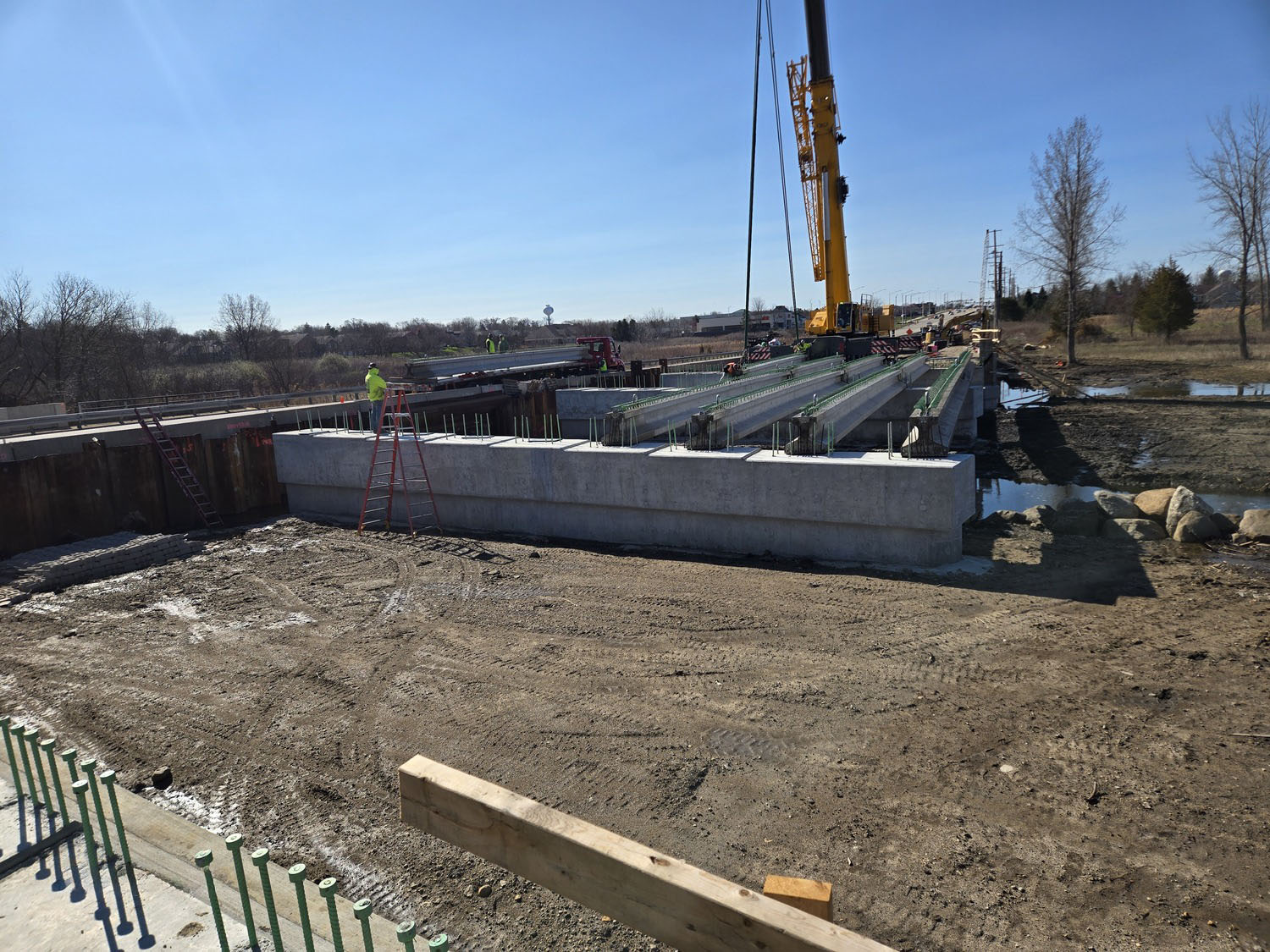
Adding to the project’s complexity, a box culvert that allowed the Woods Creek tributary to cross under Randall Road is being replaced with two new bridge structures and the waterway is being relocated. The new bridges move the Woods Creek tributary from the east side of the road to the west. The bridges provide extra capacity for the water movement crossing under Randall Road.
The last components of the southbound lanes’ reconstruction are the most difficult. The Woods Creek tributary crosses under the intersection of Randall Road and Miller Road at an angle and through a culvert. To improve this condition, the creek will be relocated, and the culvert demolition will occur in three stages. Upon removing the first section of the culvert, embankments will be constructed to allow for finishing intersection pavement that is part of a full intersection reconstruction. Once construction is complete, no water will run under the intersection.
The project requires coordination with and approval from the Army Corps of Engineers for the creek relocation. Adding to the complexity is sensitive wetland mitigation needs. New wetlands are being established with the creek realignment and proper vegetation installation will be required.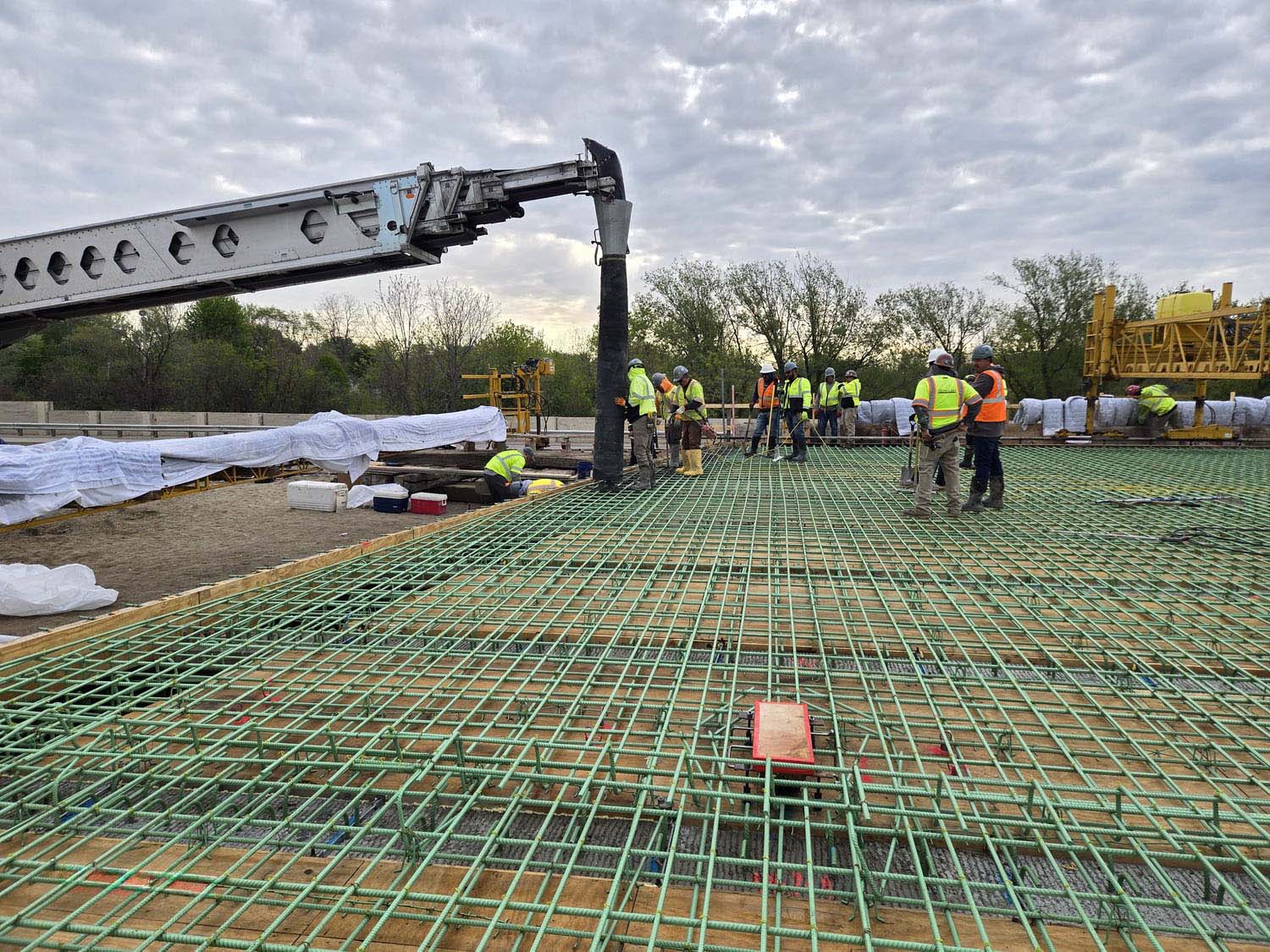
The Miller Road intersection reconstruction includes additional improvements. Extra turn lanes are being added, widening the intersection as well as new pedestrian crossings and traffic signals. In addition, a new traffic signal is being added at the Alexandra intersection. These intersection upgrades, along with a new bike path and sidewalk extending the length of the corridor, help to improve mobility and increase safety for pedestrians and motorists.
The Randall Road North Segment is anticipated to reach substantial completion by the end of 2027, delivering an improved stretch of Randall Road to the communities and the traveling public. The Civiltech and Baxter Woodman Resident Engineers are working side by side with effective communication and continuous collaboration to ensure this multi-faceted project is a success.