
The recently completed and adopted City of Des Plaines Active Transportation Plan (ATP) was created with an exciting and unique collaborative process including coordination across public agencies and other regional transportation plans as well as collaboration across Civiltech departments. Ensuring that a specific public agency’s plan includes connectivity to a regional network is a current practice in planning studies. Connecting plans at all governmental levels and across regional transportation networks provides mutual benefits across communities.
During the development of the Des Plaines ATP, the Civiltech planning team brought strong regional insight and knowledge from their previous work on the Mount Prospect Arterial Bike Network Study. Des Plaines and Mount Prospect share a long border, and the Mount Prospect plan had established recommended bike network connections between the two municipalities. The team was able to build on the recommended connections in the Des Plaines study. 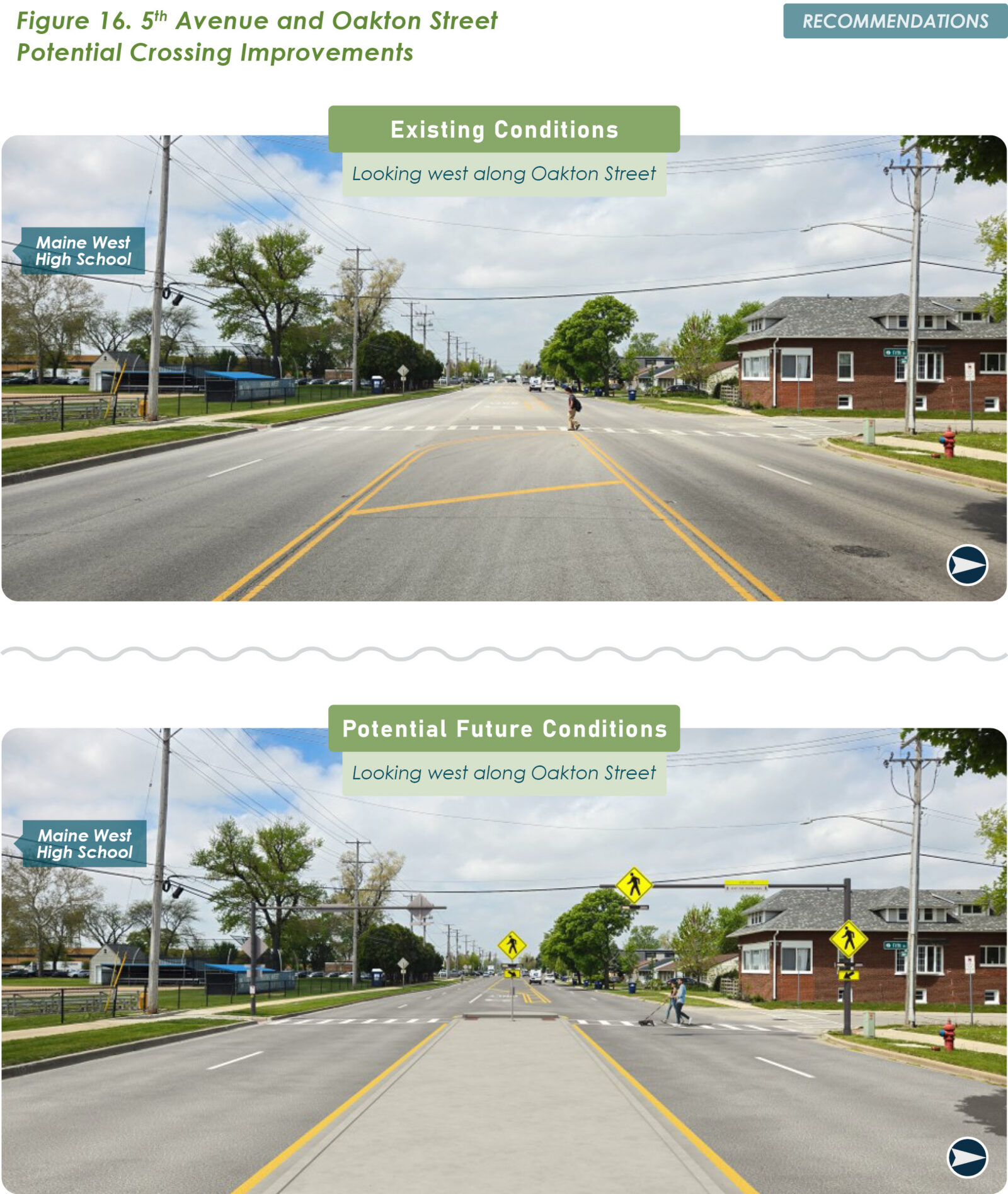
The team collaborated with other regional partners, including Cook County, to ensure the Des Plaines plan was consistent with ongoing planning and engineering efforts at the county level. One example of the benefit of regional connectivity and collaboration involved a road in Des Plaines on which both a shared-use path and a trail crossing is recommended in the ATP. However, under their jurisdiction, the County is planning to resurface this road. As part of the forward-looking collaboration between the agencies, the County and City met to discuss if there were design refinements that would make their resurfacing project forward compatible with the crossing design and potential future shared-use path.
At the time of the ATP development, Cook County also had an O’Hare Area Bike Network Study underway involving bike network planning adjacent to Des Plaines. The Civiltech team coordinated with the County on network recommendations. As part of the Cook County collaboration, a county representative joined the ATP team at a pop-up event to receive input on the O’Hare Area Bike Network Study at the same time.
The Des Plaines ATP incorporated community input from a robust public engagement process. A primary goal of the public engagement strategy was to meet people where they are. This involved hosting two pop-up meetings at the Taste of Des Plaines and Winterfest. Other engagement activities involved Community Advisory Group meetings and outreach to a wide variety of stakeholders and community groups that might not normally be engaged in a planning study. 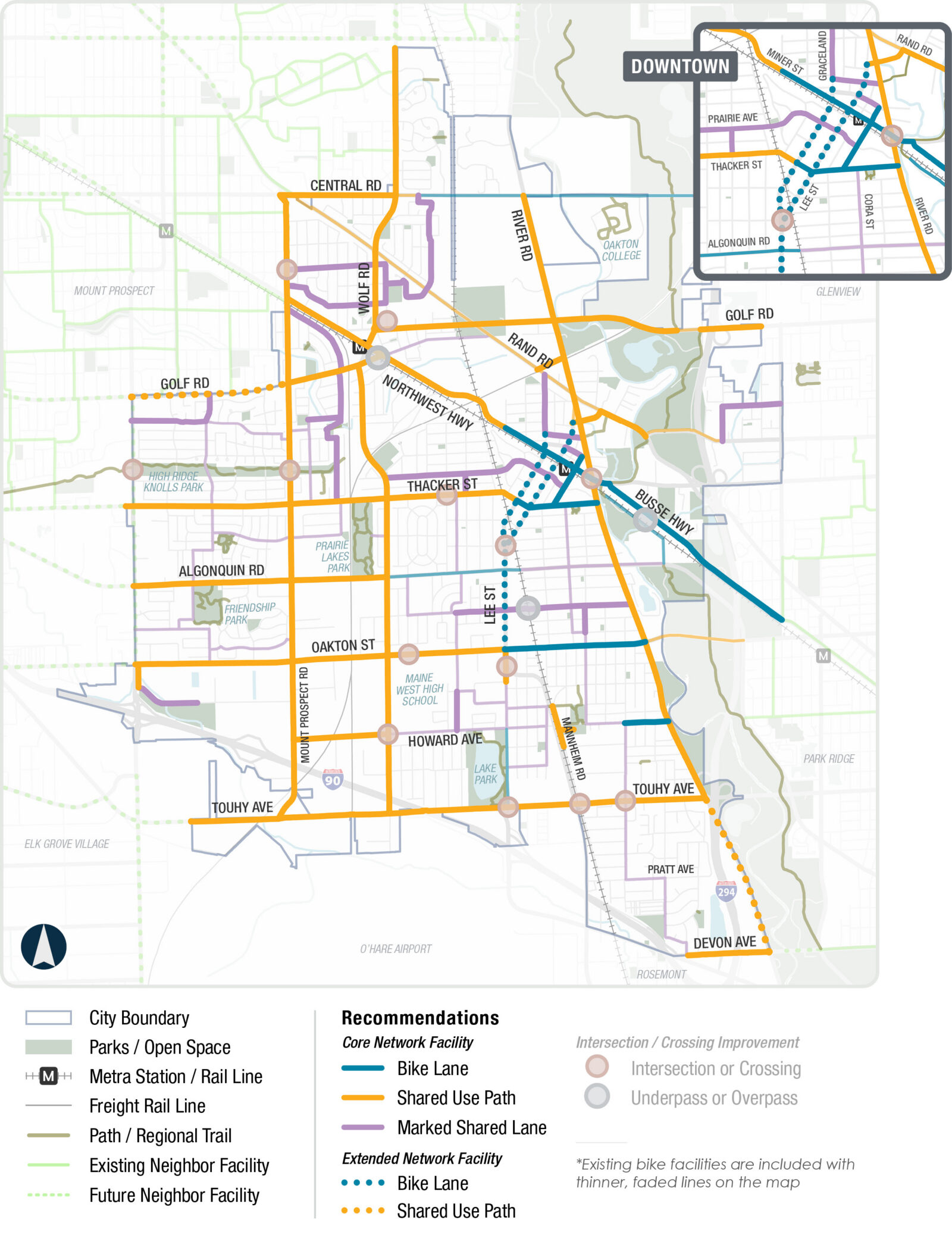
To capture additional public input, a Wikimap and public survey were made available on the city’s web page which is a unique page dedicated to the study and other bicycle and pedestrian updates. Updates and information were pushed out to the public through a newsletter, social media and community contact list.
The Des Plaines ATP provided a unique opportunity for collaboration across Civiltech service departments. Civiltech’s Traffic Engineering team provided recommendations on intersection improvements and facility types. The Phase I team provided consultation having led the previous Mount Prospect study. Renderings were provided by the Landscape Architecture department, and Transportation Engineers in Civiltech’s Chicago office assisted with preparing cost estimates for the improvement recommendations featured in the implementation section of the study.
The final plan was presented at the Des Plaines City Council meeting in April where the Council officially adopted the plan. The City is now looking forward to implementation including prioritizing projects, programming recommendations into budgets, and applying for grants. The Des Plaines ATP has the support of the City and community organizations and will serve as a guide to developing an outstanding bike network with regional connectivity.