
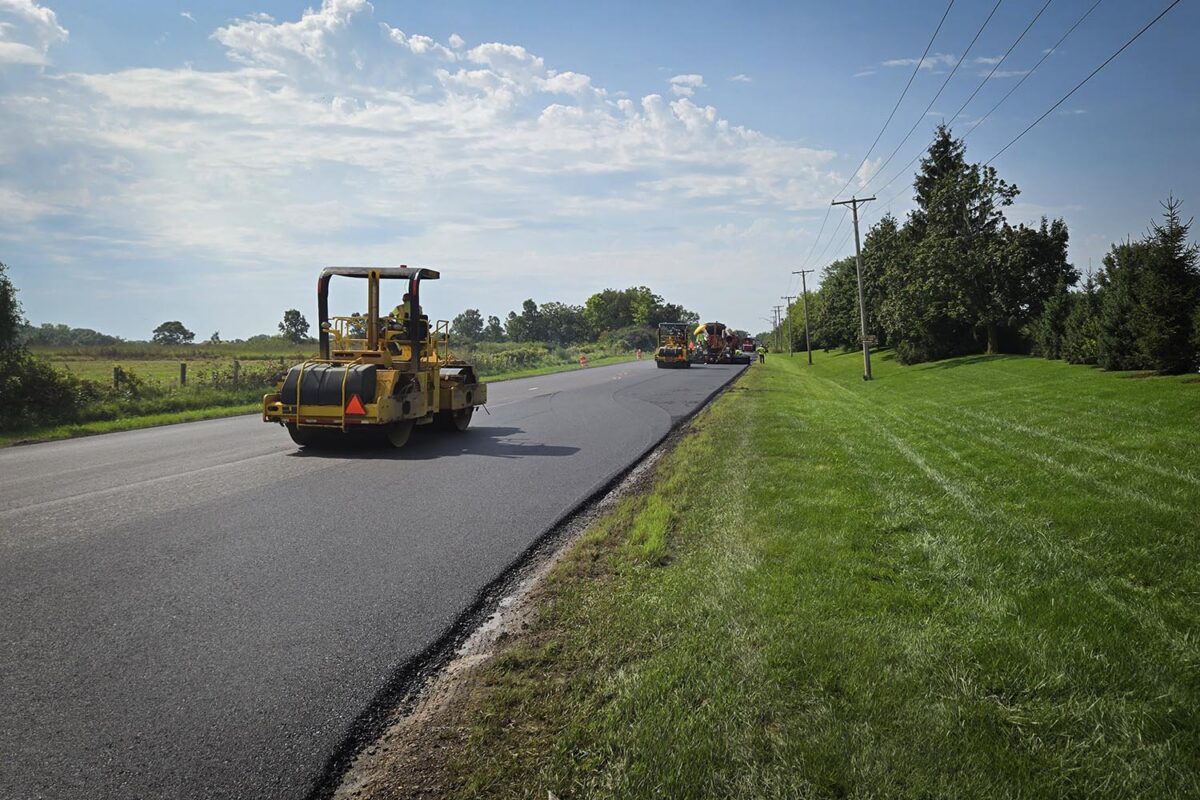
Not every road needs the same repair. The McHenry County Division of Transportation is putting that principle in practice across four roadways totaling about 15 miles, with different paving approaches and unique details on each. Civiltech Resident Engineer Dan Echols is administering the work as part of a Construction Engineering Services contract with the County.
Two of the roadways are being resurfaced with a standard milling and overlay process. Wilmot Road is in the Village of Spring Grove and is the longest of the four projects. This roadway is being resurfaced with a standard mill and repave application and includes a 3-foot shoulder widening at various locations.
Richardson Road in the Village of Spring Grove is the shortest of the four projects and is also receiving a standard mill and repave application and a 3-foot shoulder. This resurfacing includes the installation of new guardrail, designed by Civiltech’s Design Engineering Team, at three locations.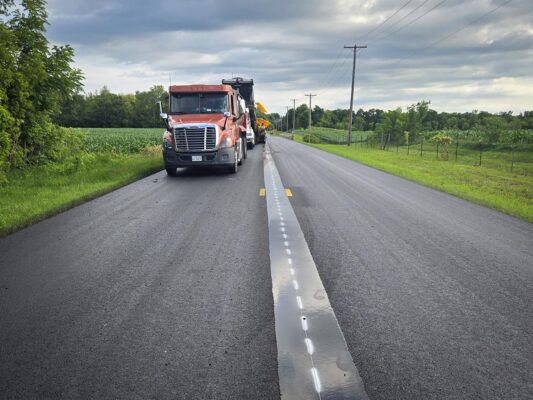
Flat Iron Road in the City of Harvard is being paved with a less common process called a thin lift overlay. Different from a typical milling and overlay, the thin lift overlay is a ¾” surface asphalt that is overlaid on the existing pavement. The existing pavement first receives a heavy tack coat to bond the layers, followed by the surface asphalt. The road will then receive a new aggregate shoulder. The thin lift overlay is a cost-effective approach to repaving, adding many years of functional service life to the roadway.
Maple Street in the City of Marengo is receiving a specialized paving treatment called hot-in-place recycling (HIR). HIR is an on-site, in-place, pavement rehabilitation method that consists of heating, scarifying, mixing, placing, and recompacting the existing bituminous pavement.
First, a machine with propane heaters passes over the existing asphalt to soften it. That is followed by a second machine that heats the surface further and has an auger that breaks up the asphalt. Additional bituminous additives are then blended to the loosened asphalt to restore flexibility and binder properties. The recycled asphalt is then re-profiled through a paving screed at the rear and compacted with a traditional roller,
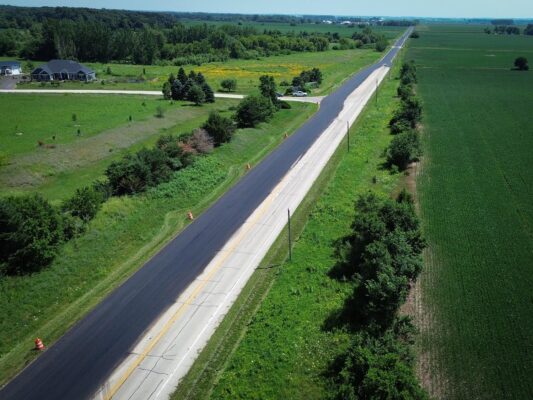
HIR is cost-effective when compared to traditional milling and overlay methods because it minimizes material removal and hauling costs. Considered environmentally friendly, the process reuses the existing aggregate and binder, greatly reducing or eliminating construction debris sent to landfills. Lastly, this process allows traffic to return to the paved surface quickly, minimizing interruptions to the traveling public.
Following the HIR process, the County chose to pave over the top with a leveling binder and a new surface course, raising the road profile. The outcome is a pavement base rejuvenated by the HIR process with a new surface layer on top.
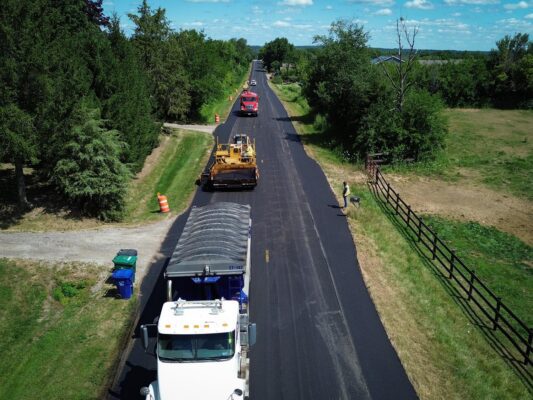
The Maple Street project includes a stretch of road leading into a subdivision which received a standard mill and resurface. This section of the project also includes ADA compliance upgrades at sidewalks and curb ramps.
Another distinctive feature of this project is that the County is testing the use of rumble strips versus mumble strips on this stretch of road. Rumble strips are grooved or raised patterns in the pavement along the centerline or shoulder that cause a car to vibrate and make a rumbling sound to alert drivers. Mumble strips are wavy, continuous grooves milled into the centerline or shoulder that also alert drivers. However, mumble strips create less noise than rumble strips. In addition to reducing noise that could have a negative impact on neighbors, the mumble strips hold less water reducing the pavement breakdown caused by standing water in rumble strips. 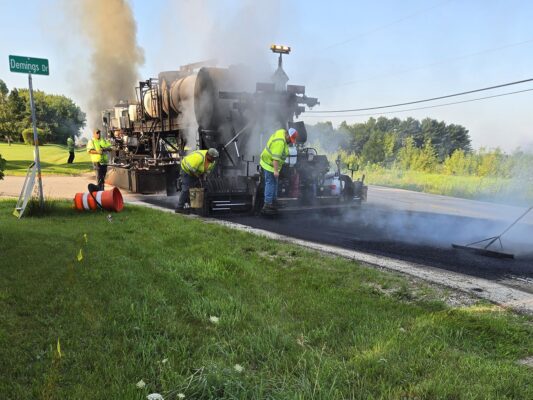
Civiltech’s Highway Traffic Noise Analysis Lead, Jim Woods, P.E., PTOE, will perform the noise analysis on the two types of strips at the Wilmot Road test location. Based on the analysis, the County will choose the strip it prefers, which will then be applied to all four roadways.
While these four stretches of road in McHenry County are being resurfaced, each individual project boasts unique features and construction challenges. Together, these four projects show how McHenry County is matching pavement treatments to each road’s needs, balancing cost, schedule, durability, and impact on residents.