
Two transportation planning challenges took the stage at the Illinois Department of Transportation’s (IDOT) Fall Planning Conference. Whether it’s an active transportation plan shelved after being adopted with enthusiasm or the creation of an ADA transition plan that feels out of reach to a community, both issues, and how agencies are overcoming them, were addressed in sessions that included expertise from Civiltech’s Transportation Planning team.
The conference was held September 2-4 on the campus of Illinois State University in Normal, IL. Titled ‘Preserving a Legacy, Planning for Tomorrow,’ the event provided an opportunity for Planners, Public Agencies, and Transportation Professionals to learn, collaborate, and explore infrastructure strategies across the state.
This year, Civiltech actively participated in the conference with our Director of Planning, Lissa Sweeney, AICP, LEED AP, presenting in two well-attended sessions. Also, Civiltech kicked off the conference on day one by hosting a happy hour together with Cambridge Systematics and TYLin. The event, open to all conference attendees, provided an evening of networking and fun.
On day two of the conference, Lissa joined representatives from the Chicago Metropolitan Agency for Planning (CMAP) and IDOT presenting ‘ADA Transition Plans: Latest Trends, Best Practices, and Resources’ as part of the Active Transportation Breakout Session. This session built on IDOT’s recently adopted Walk.Roll.Illinois Active Transportation Plan, a statewide initiative to improve safety and accessibility for pedestrians and bikers as well as wheelchair users and other forms of micromobility. The IDOT program includes strategic policy, programs, and planning tools to assist communities in sustainable, safer, and inclusive transportation networks and infrastructure. In the session, IDOT shared templates and resources they have created including an ADA transition plan template and companion guide for communities.
CMAP discussed ADA transition plan requirements, data collection methodologies and resources developed while providing technical assistance to twelve communities successfully completing ADA transition plans. Lissa then addressed myths and concerns that agencies express about creating ADA transition plans. Notably, that an implementable ADA transition plan is attainable and within reach of all communities, especially when utilizing the tools and resources available from IDOT and CMAP.
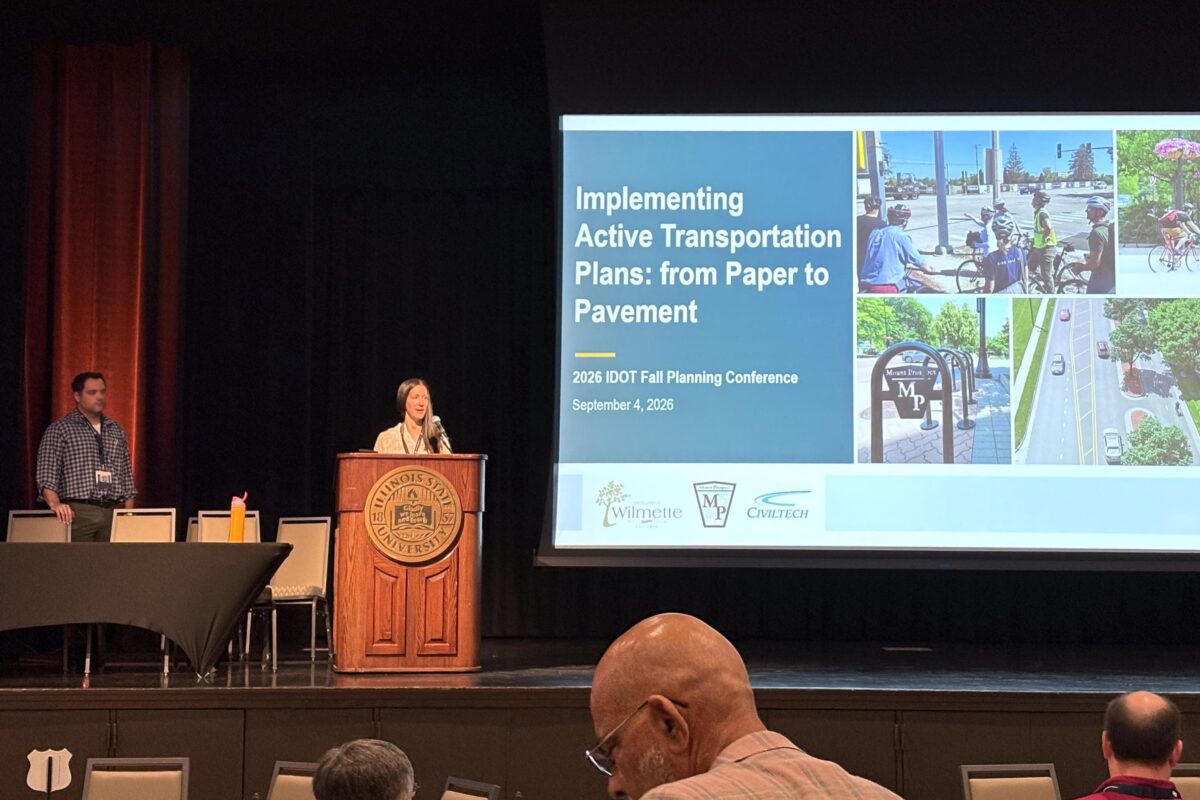
On day three, Lissa teamed with Ron Milanesio, Village Engineer at the Village of Wilmette, to present “Implementing Active Transportation Plans: From Paper to Pavement.” Often active transportation or bicycle and pedestrian plans are adopted by communities only to be filed away. The goal of this session was to share innovative approaches to ensure a plan is implementable and progresses through design and construction to a successful project. The presentation provided frameworks that communities across the state could replicate.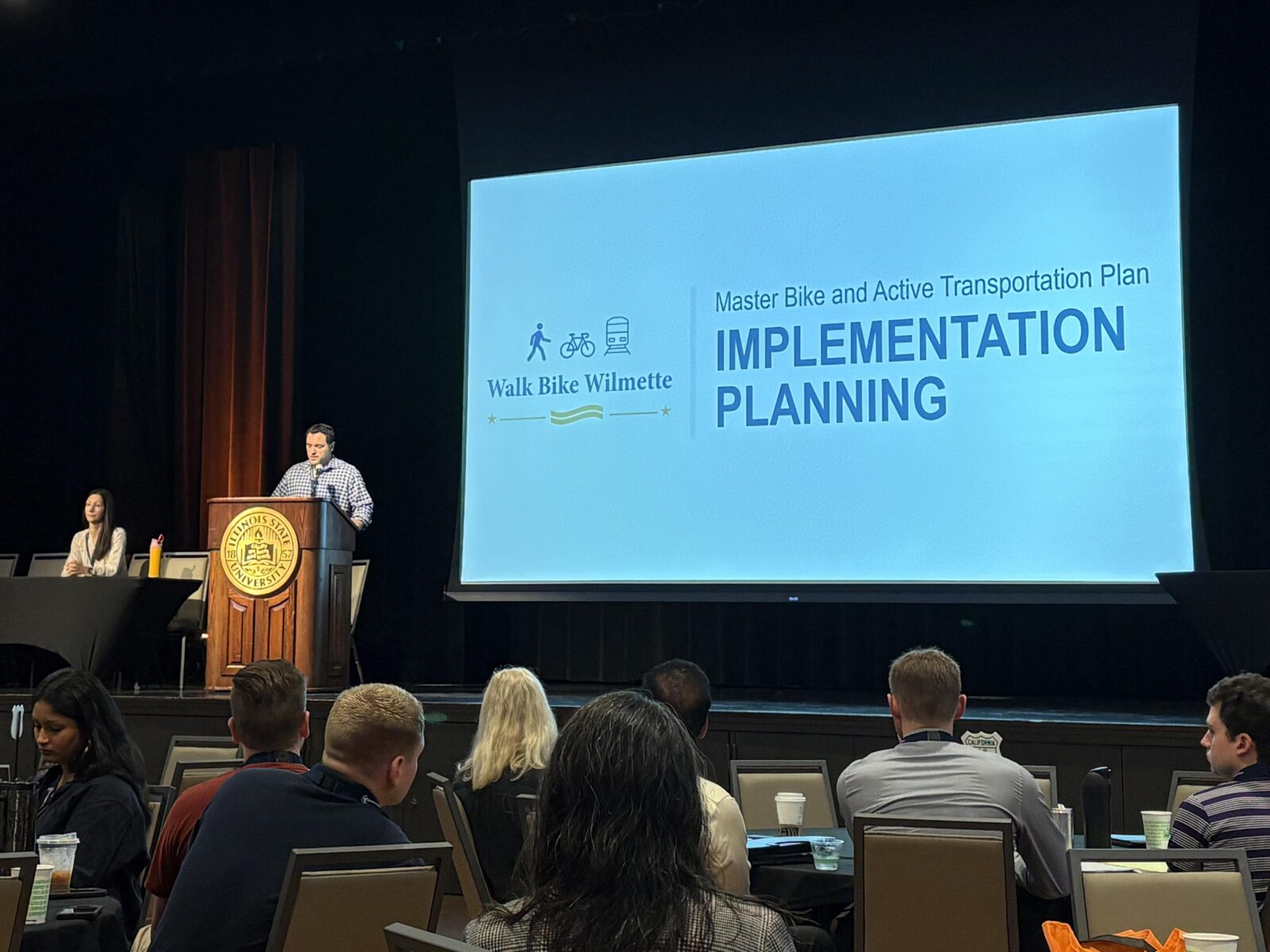
The session focused on two communities, the Village of Wilmette and the Village of Mount Prospect, and the innovative approaches both have taken to implement their active transportation plans. Mr. Milanesio first presented the Village of Wilmette’s unique approach. The key to Wilmette’s success is keeping their plan fresh, updated, and top of mind. The Village develops a 5-year lookahead annually for their Master Bike and Active Transportation Plan, adopted in 2021. This annual update identifies projects for funding and for implementation in coordination with other infrastructure projects. Proactively revisiting the plan ensures that the Village continues to move it forward by implementing the actual projects.
Lissa then presented on the Mount Prospect Arterial Bike Network Study. Civiltech worked with the Village to develop a strategy to construct bike facilities along arterial and other high traffic streets. While this project was a planning study, the Village took strategic steps to ensure that the plan was implementable and would move forward. Engineering components were considered to create recommendations that were shovel ready. Analyses of available land uses and destinations, construction costs, right of way, potential utility conflicts, and traffic capacities were undertaken. Additionally, this plan was accompanied by engineering drawings at 1”=200’ scale and looked at the impacts of the study’s recommendations across 18 corridors. The development of drawings illustrated details of the proposed alignments beyond a typical planning-level effort.
The IDOT Planning Conference is held annually in different parts of the state allowing the sessions and activities to highlight local initiatives. This year’s event in Normal featured interesting and experiential events sponsored by local industries including a visit to the State Farm Insurance Vehicle Research Facility Tour and a tour of the Rivian plant, complete with the opportunity to test drive the vehicles.
The conference delivered sessions that highlighted an exciting collaboration between all levels of public agency including state, regional, and local. Statewide knowledge and resource sharing supports attendees in developing plans that benefit all users of their local transportation networks and build overall regional connectivity.