
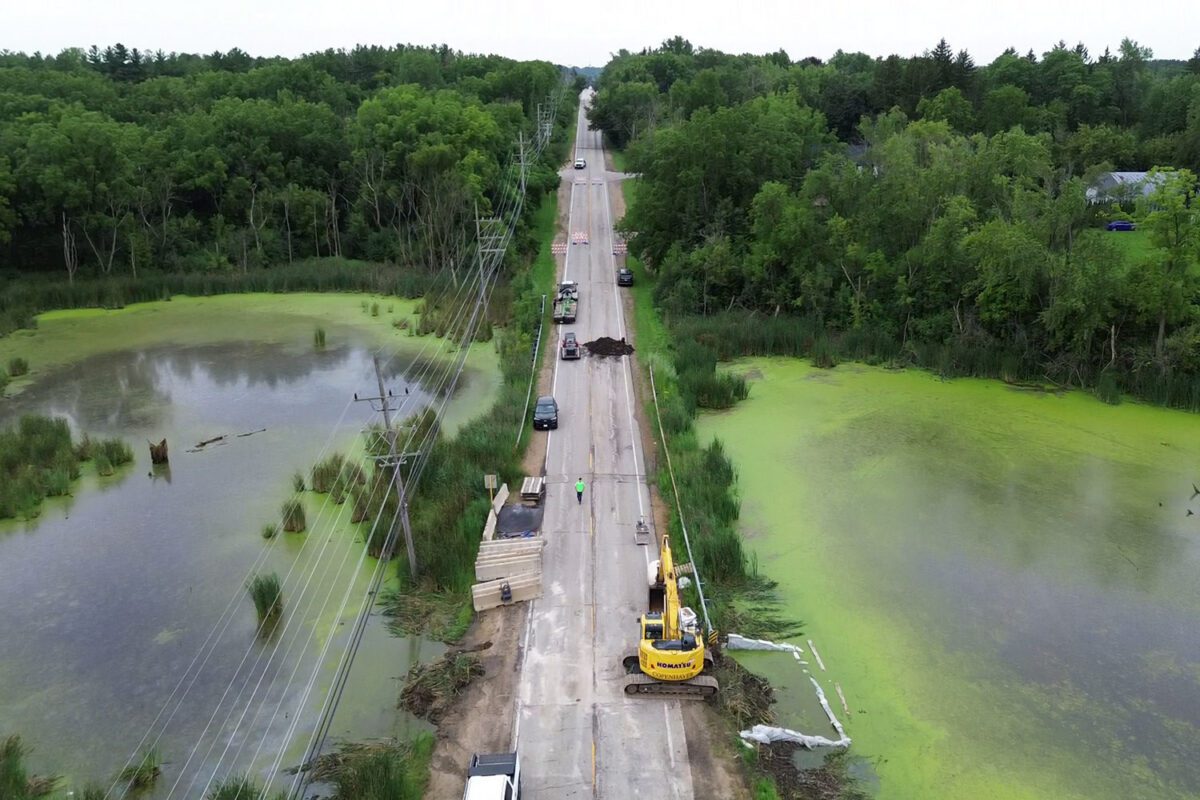
Sometimes nature provides the best solutions to repair failing man-made infrastructure. The Grassmere-Haverton Drainage Improvements and Wetland Mitigation Design project is an outstanding example of a robust, successful Nature-based Solutions (NbS) approach that turns a chronic flooding problem into a thriving wetland system.
A stretch of IL Route 59 in the Village of North Barrington cuts through more than thirty acres of wetland serving a 250-acre watershed. For years, this section of road suffered chronic stormwater flooding, with water overtopping the pavement and creating hazardous driving conditions that repeatedly forced road closures. The failing stormwater infrastructure also negatively impacted more than forty properties across the watershed.
The Village of North Barrington, with assistance from the Lake County Division of Transportation and the Illinois Department of Transportation, led the effort to fix the regional problem. Beyond replacing the failed culvert and redesigning the roadway drainage to restore proper function, the project needed environmental expertise. Civiltech’s Nature-based Solutions team was brought on to handle the environmental studies and wetland mitigation given the scale of the engineering work’s ecological impact.
The Civiltech team looked to nature for solutions to minimize wetland impacts, provide over 32 acres of wetland and buffer design, and design an open channel with in-stream structures. The goal was not to eliminate the water, but to balance the water levels on both sides of the road and provide natural solutions to control stormwater. Also, wetland mitigation efforts and permitting were extensive due to the large areas of wetland on both sides of the road.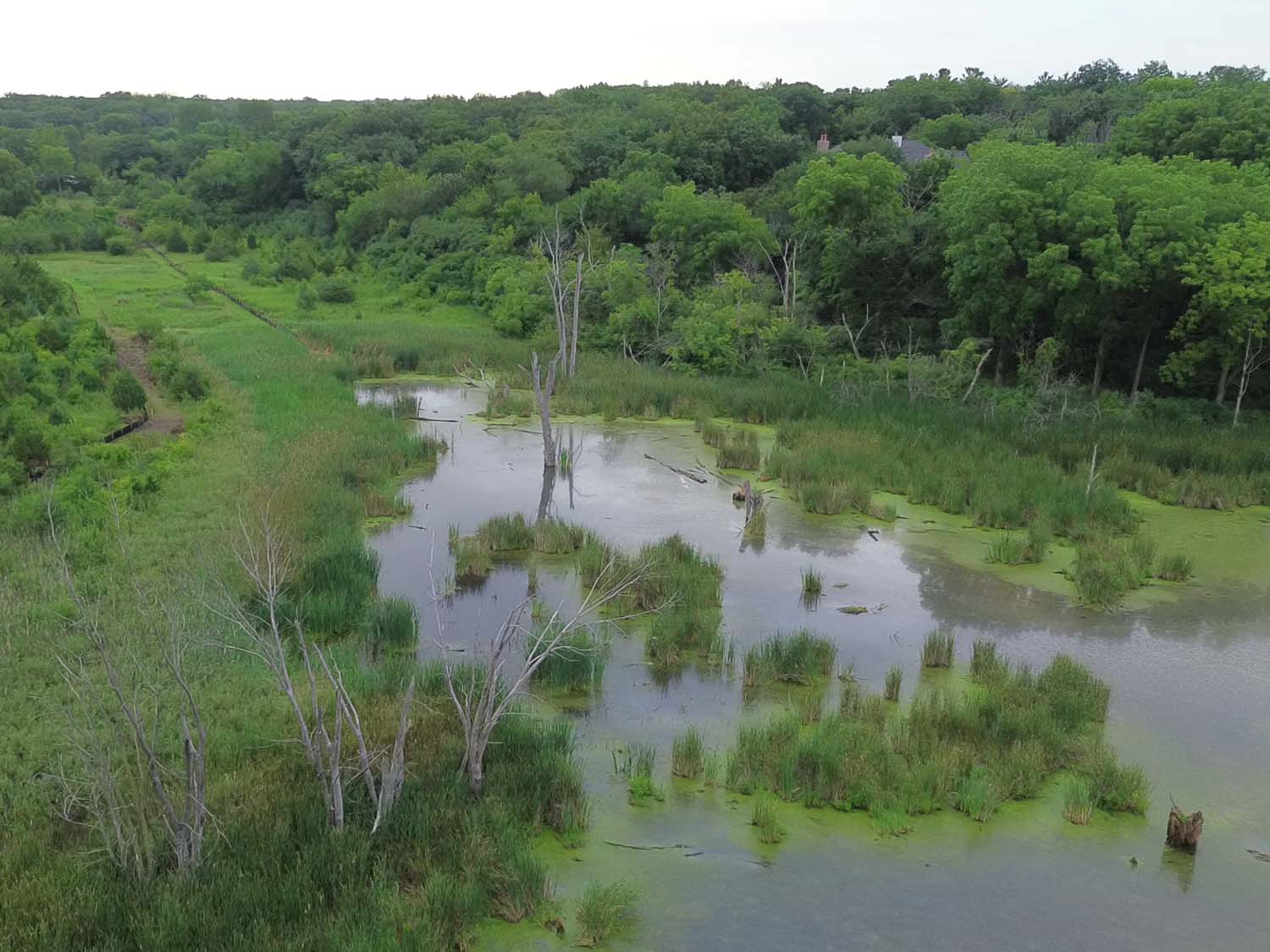
By balancing the water levels and designing natural methods to manage those levels, the design achieved maximum stormwater volume storage and minimum water level drawdown in the existing wetlands and water bodies. The proposed final design lowered water levels by approximately seven inches and provided a 50-year stormwater storage volume with minimized wetland and water body impacts.
Many interesting nature-based design features were implemented and worked together to manage the water levels and wetlands impacts. On the eastern edge of the project limits, a vegetated weir was created to control water levels. A vegetated weir is a barrier that slows water flow and controls water levels by placing an earthen dam across a stream, ditch, or channel. Vegetation planted on the weir slows, filters, and manages water flow. Also, a meandering channel was installed to improve water quality and provide a water quality lift. The channel contains riffles that agitate the water for aeration. Native plantings were installed on the side banks of the channel.
With wetlands flanking the roadway on both sides, the permitting process and alternatives analysis were anything but simple. The culvert improvements and water body modifications initially triggered a total permanent direct and indirect impact of nearly 32 acres of wetland and water body. Off-site mitigation would have been prohibitively costly, so the team pursued Permittee-Responsible Mitigation (PRM), an onsite mitigation approach. PRM allows mitigation to happen directly alongside design and construction, rather than being handled by a third party, though it also means the project’s owners and developers must provide instruments for long-term protection and management. 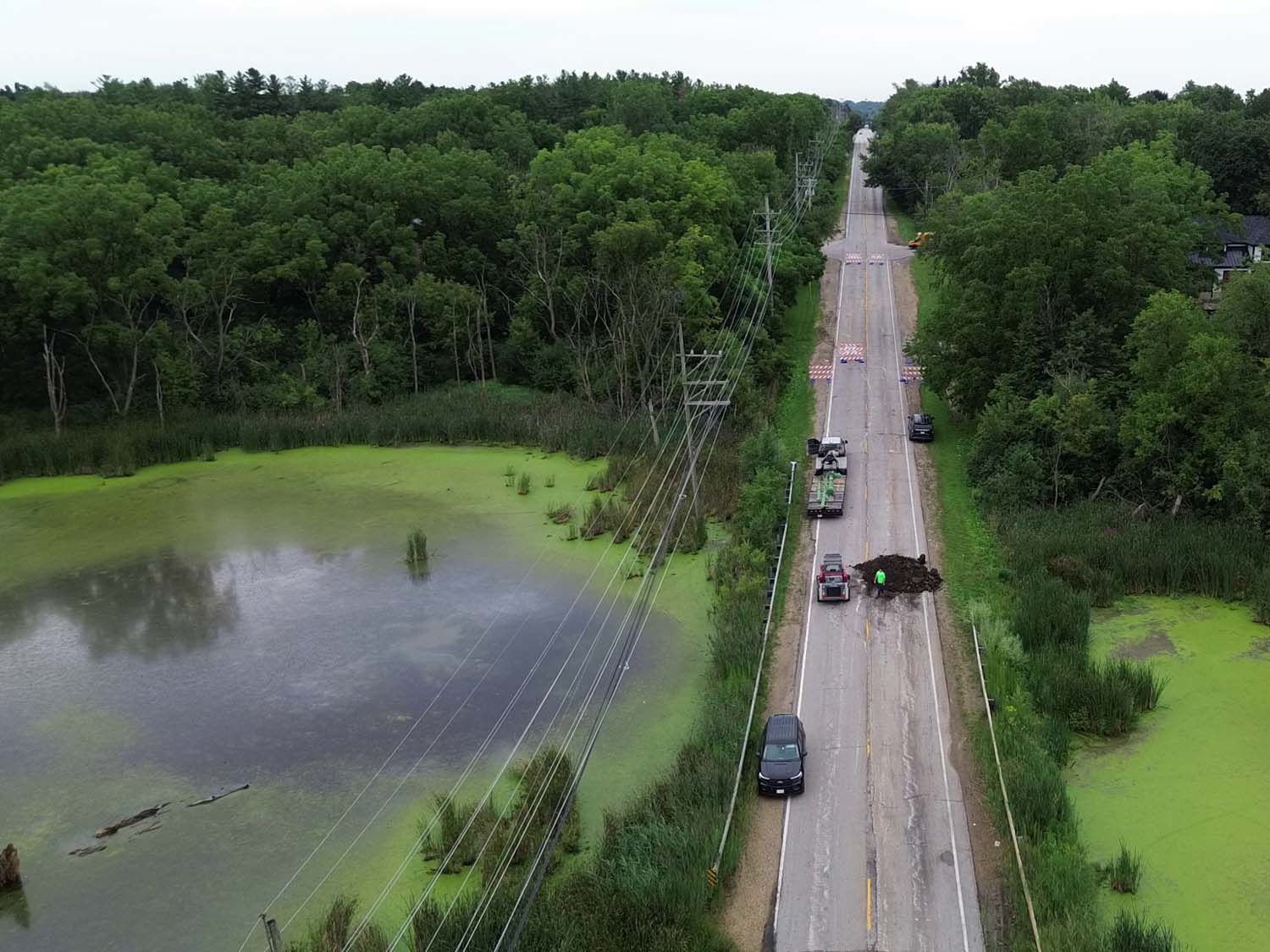
The PRM process led to a conservation easement and a five-year mitigation plan. Civiltech worked with the Village to line up funding to carry out the plan, and the NbS team is now working with the Village and local conservation groups to determine who will steward the easement and plan over the long term.
For Civiltech’s NbS team, the project provided genuinely exciting potential ecological and water quality benefit opportunities within the wetland and water body limits. The ecological benefit opportunities included restoring exposed mud flat areas to emergent wetland communities, converting invasive species dominant communities to native and high-quality aquatic resource communities, and implementing native species communities that promote threatened and endangered species habitats, including the Rusty Patched Bumble Bee and Monarch Butterfly.
The water quality benefit opportunities included implementing Natural and Nature-Based Features (NNBF) such as vegetated channels and embankments, riffles, and vegetated weirs, which promote aeration, energy dissipation, increased infiltration, filtration, and pollutant uptake. Collectively, these measures demonstrated a meaningful, quantifiable ecological and water quality lift that supported the design and permitting strategy.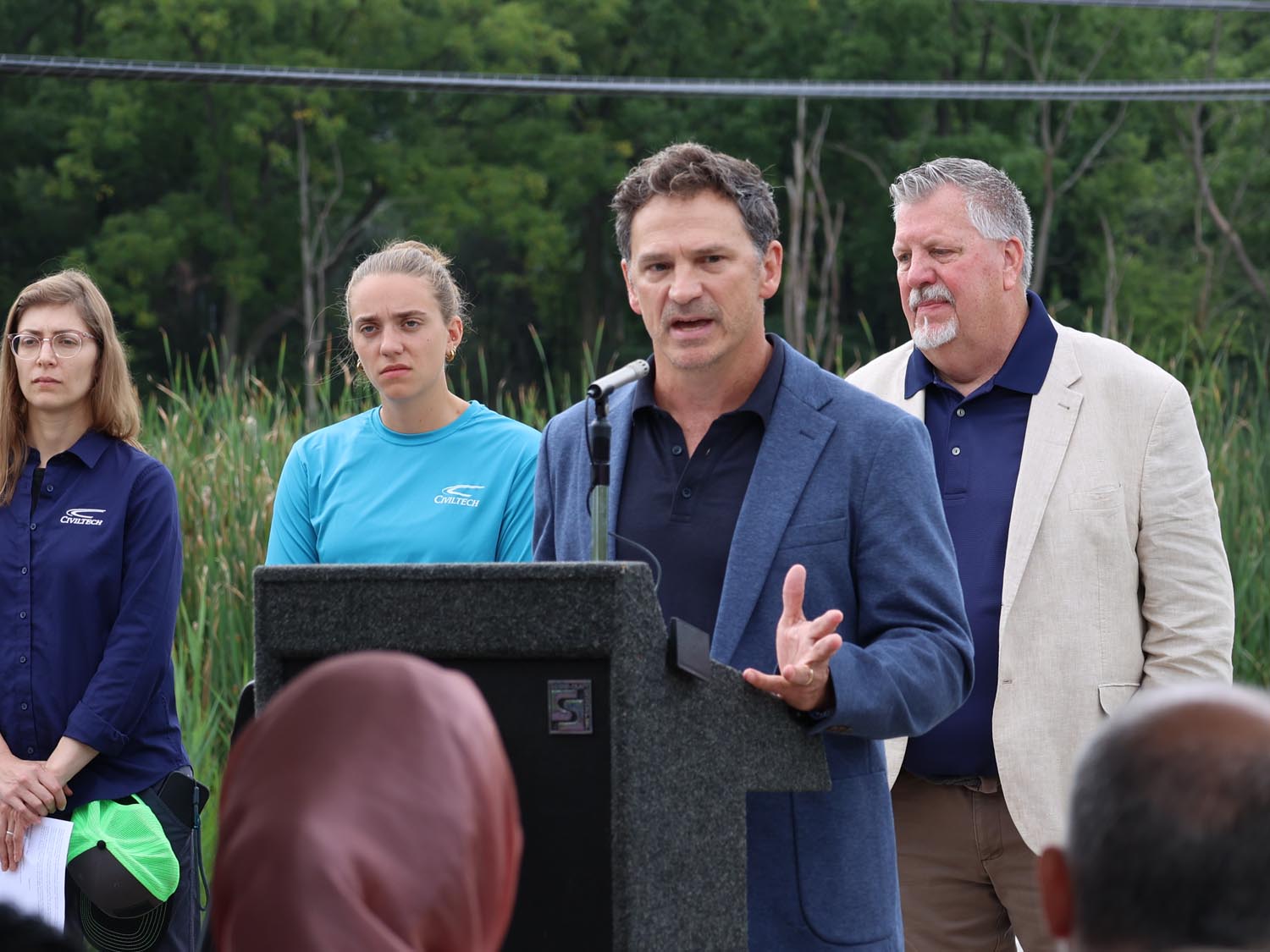
To recognize the completion of the design and kick off construction, the Village held a groundbreaking ceremony on August 18. The event included opening statements by Village President, Eleanor Sweet McDonnell and remarks by IDOT District 1 Engineer, Jose Rios; Lake County Stormwater Management Commission Executive Director, Kurt Woolford; and Senior Project Manager, John Beissel and Project Engineer, Jacob Wellbank of Robinson Engineering who provided Design Engineering.
Civiltech’s Director of Nature-based Solutions, Barry Stuedemann, accompanied by the NbS team, gave a presentation titled Grassmere-Haverton Drainage Improvements and Wetland Mitigation Design in which he shared the Permittee-Responsible Mitigation process; water quality, ecological, and habitat enhancement features; project challenges; and the design outcomes and long-term management goals and requirements.