
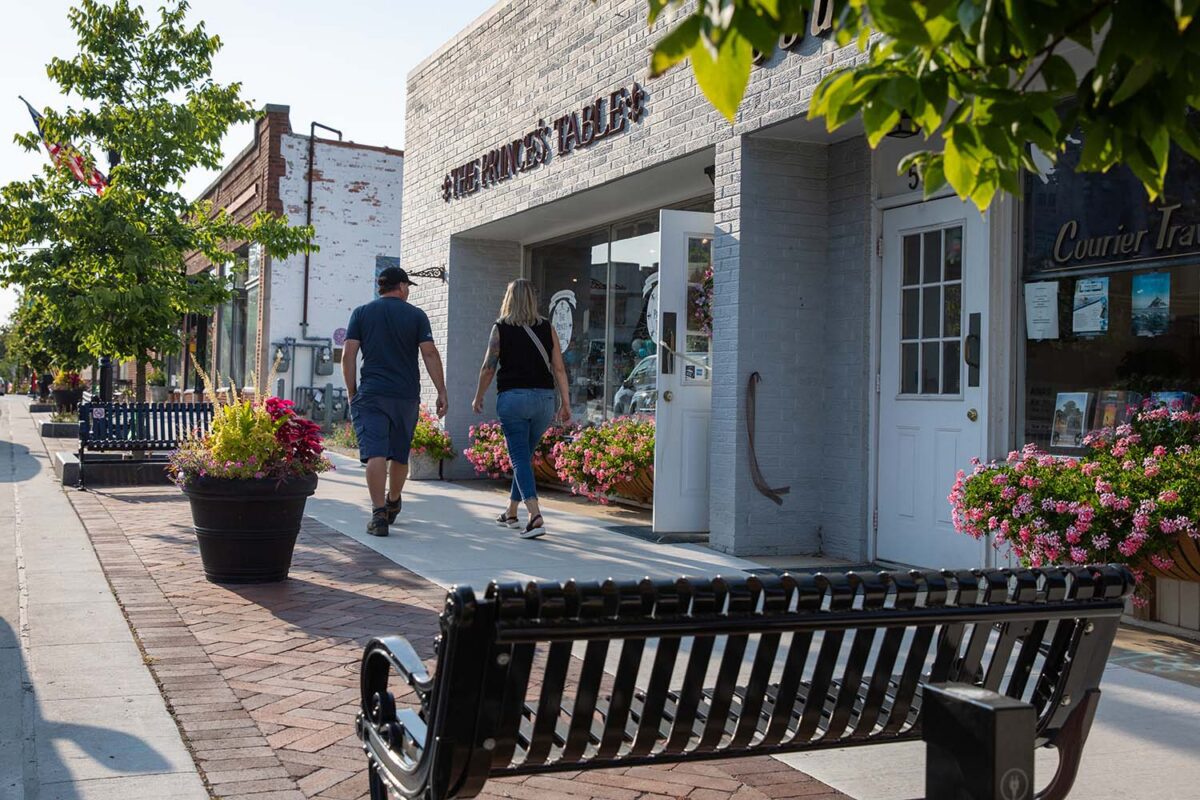
More than just aesthetics, urban trees are a critical asset to municipalities, providing economic, environmental, social, and health benefits. Civiltech’s Landscape Architecture team is passionate about helping clients understand the value of trees in urban streetscapes, including upfront costs versus long-term benefits and best practices for maintaining an urban forest.
Downtown areas with a healthy tree canopy can realize economic benefits such as increased property values, successful commercial spaces, and increased foot traffic. However, the environmental benefits of urban trees can provide even greater long-term value.
Key environmental benefits include stormwater management and heat reduction. Trees help mitigate urban flooding by reducing stormwater runoff and improving groundwater quality. Tree canopy can help lower temperatures in urban “heat islands” that are otherwise dominated by asphalt and concrete. Trees can also shade buildings, reducing energy demands and greenhouse gas emissions.
Social and health benefits are attributed to areas with robust tree canopy. Trees make public spaces more attractive and comfortable, and support walkability, contributing to stronger community interaction. Trees can also aid in traffic calming and reduce noise and light pollution. Health benefits include improved air quality, reduced heat-related and cardiovascular illnesses.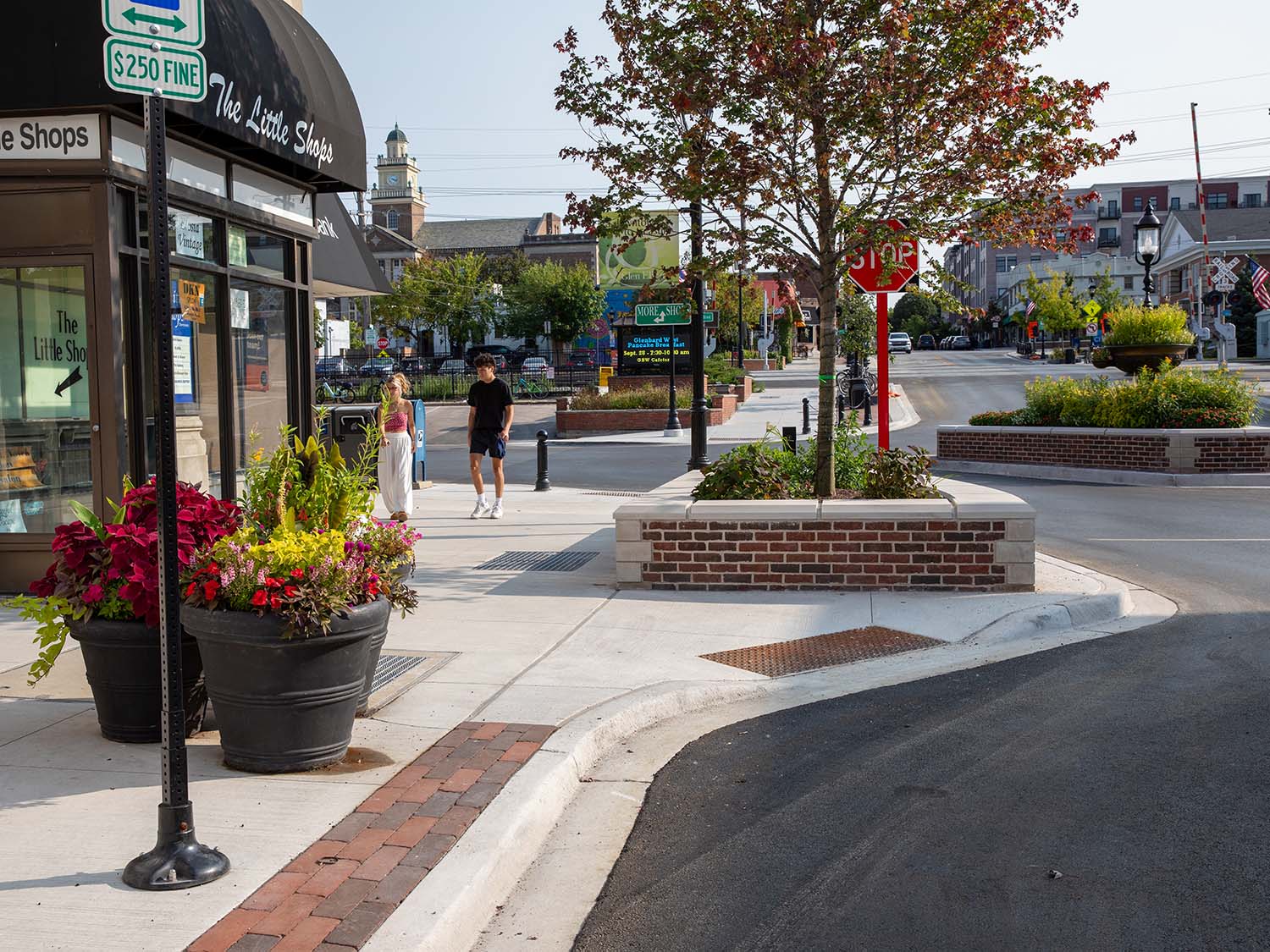
Growing healthy trees in urban areas is challenging. Trees can outgrow limited spaces, conflict with infrastructure and compete with sidewalks, utilities and visibility needs. Trees are faced with environmental challenges like compacted soil, limited water and de-icers that can be harmful. Business owners sometimes object to trees due to concerns about access and visibility for signage.
Civiltech advocates for “best practices” to address these challenges. Our landscape architecture team works with clients to select diverse species mixes that are appropriate for urban environments. Species diversity is essential to avoiding monocultures that are vulnerable to pests and disease. Selecting the right tree for the right space helps reduce long-term maintenance issues, including disruptive overgrowth and damage to surrounding hardscape. Civiltech’s tree selection criteria includes consideration of available space, appropriate spacing between trees and providing groupings of species within a corridor. Also, being mindful of tree placement within a streetscape plan can avoid future issues like trees blocking sight lines at an intersection or conflicting with utilities.
While planting large caliper trees can provide an instant impact, smaller trees establish more quickly and often have better long-term success. Larger caliper trees take longer to recover from transplant shock and often grow slower as a result. Supportive infrastructure is critical to the success of urban trees. Permeable pavers, irrigation systems, and appropriate soil blends promote healthy tree and root growth. Infrastructure such as raised curbs can be used to protect the soil from compaction and protect root systems from salt and roadway pollutants.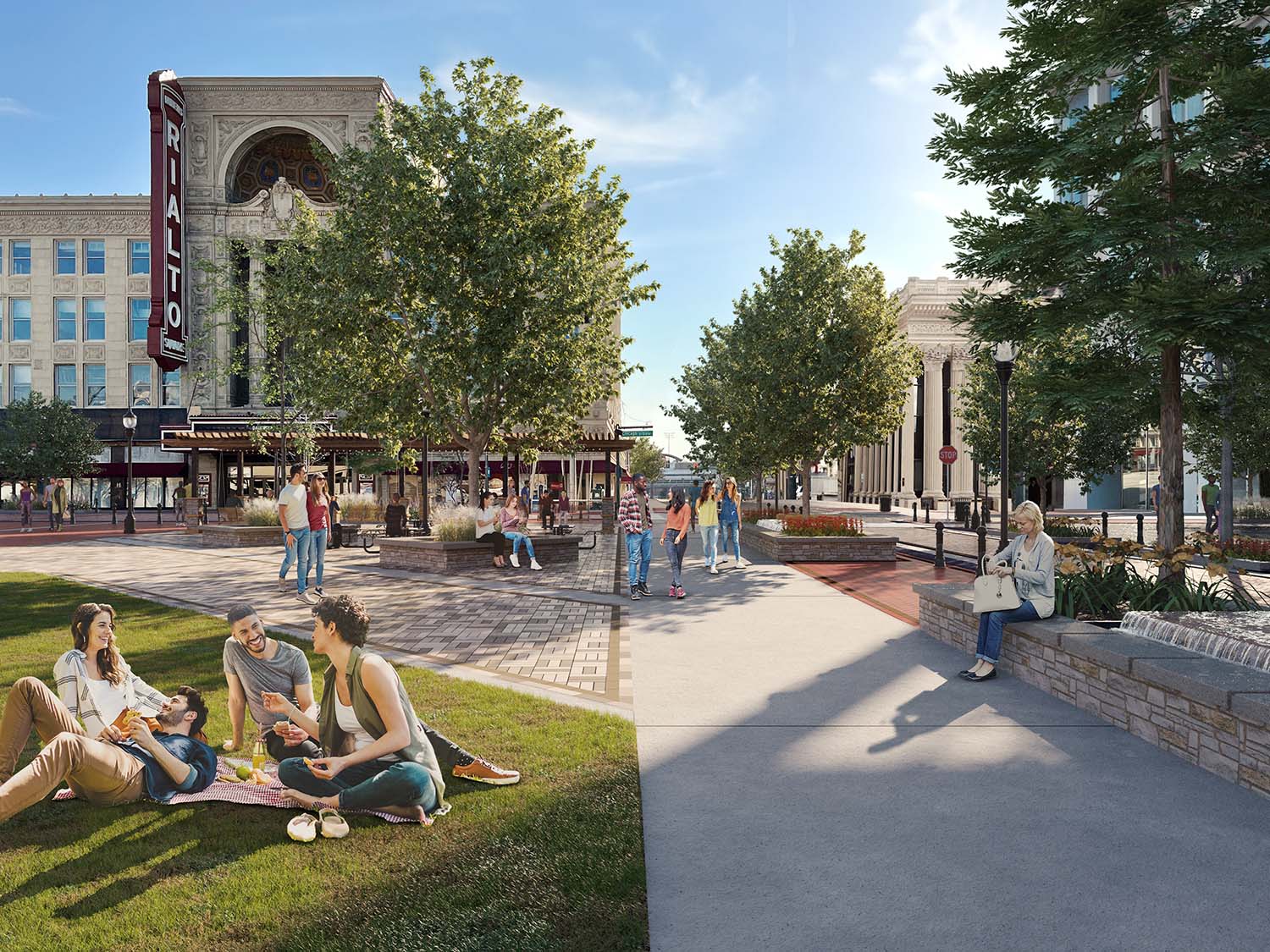
Soil volume is critical for trees to thrive in urban areas. Competition for space can make providing adequate soil volume a major challenge. . Solutions such as structural soil and suspended pavement systems allow for large soil volumes while maintaining maximum usable sidewalk space. These systems provide a structural hardscape design while ensuring that trees have adequate access to soil and water, so tree roots are less likely to disrupt the adjacent hardscape. These systems can also be paired with permeable pavers to provide stormwater infiltration.
Soil cells are a technology that Civiltech has successfully utilized for urban streetscape projects. This design creates a suspended pavement system that allows uncompacted planter soil to be installed under areas of pavement, providing the soil volume that trees need while also providing maximum sidewalk space for street furnishings, outdoor dining, pavers and pedestrian access.
Downtown Glen Ellyn’s recently completed streetscape redesign features many of these best practices. A key goal of this project was to provide large shade trees downtown, while also balancing the competition for usable sidewalk space. To achieve this, soil cell technology was utilized, and a drip irrigation system was installed. A more diverse species mix of trees was carefully selected to balance the overall urban forest, reduce long term risks and improve resilience.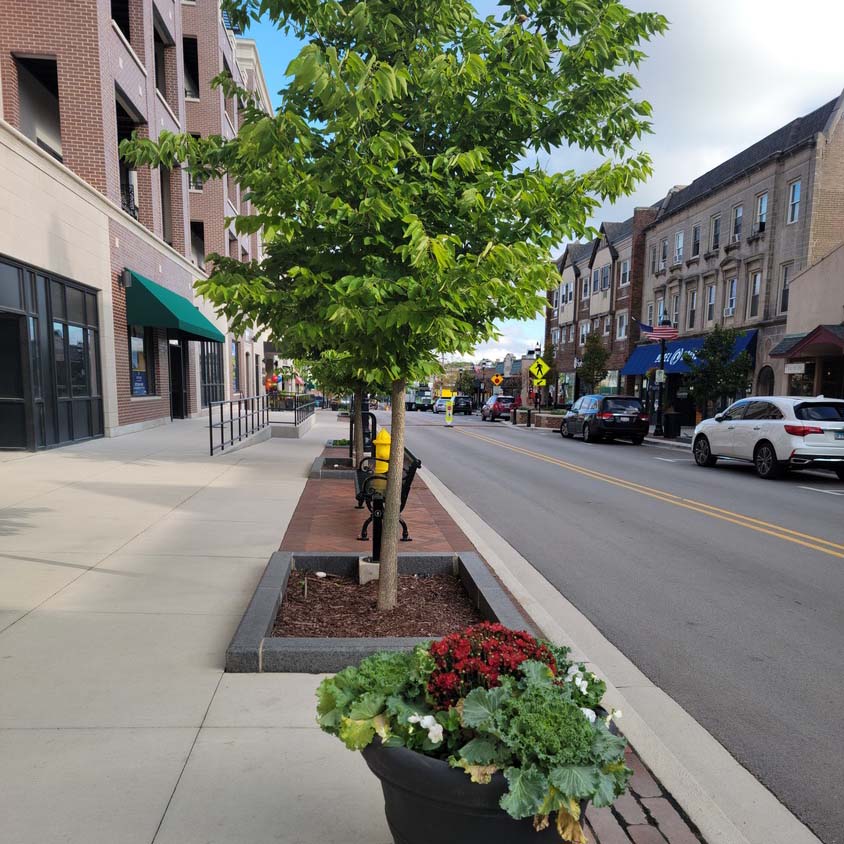
Civiltech’s Director of Landscape Architecture, Phil Hutchinson, PLA, LEED AP, emphasizes why advocating for urban trees is important. Incorporating best practices on specific projects results in a healthy tree canopy for that community and benefits the entire region. When applied widely, these strategies can positively impact our entire region.
Phil encourages communities to view trees as critical infrastructure rather than aesthetic enhancements. By emphasizing the importance of building proper infrastructure to accommodate trees in streetscape designs, we can ensure future success. He works with clients to develop an understanding of the required costs, as well as the long-term value and lasting community benefits.